Is the Golden Circle Worth It? A Guide's Honest Verdict
Twelve thousand tours' worth of reviews, four seasons of standing at Gullfoss, and one honest answer to the question every first-timer asks me.
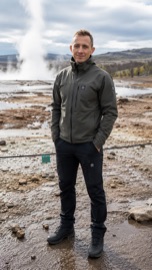 Written with Björn Einarsson, Iceland Golden Circle tour guide and local specialist
Short answer
Yes, for most first-time visitors. The Golden Circle packs a rift valley between two tectonic plates, an erupting geyser, and a 32 m double waterfall into one paved 300 km loop, and travelers score it 4.7 out of 5 across more than 4,000 Tripadvisor reviews. Skip it only if you have already driven it or crave empty backcountry.
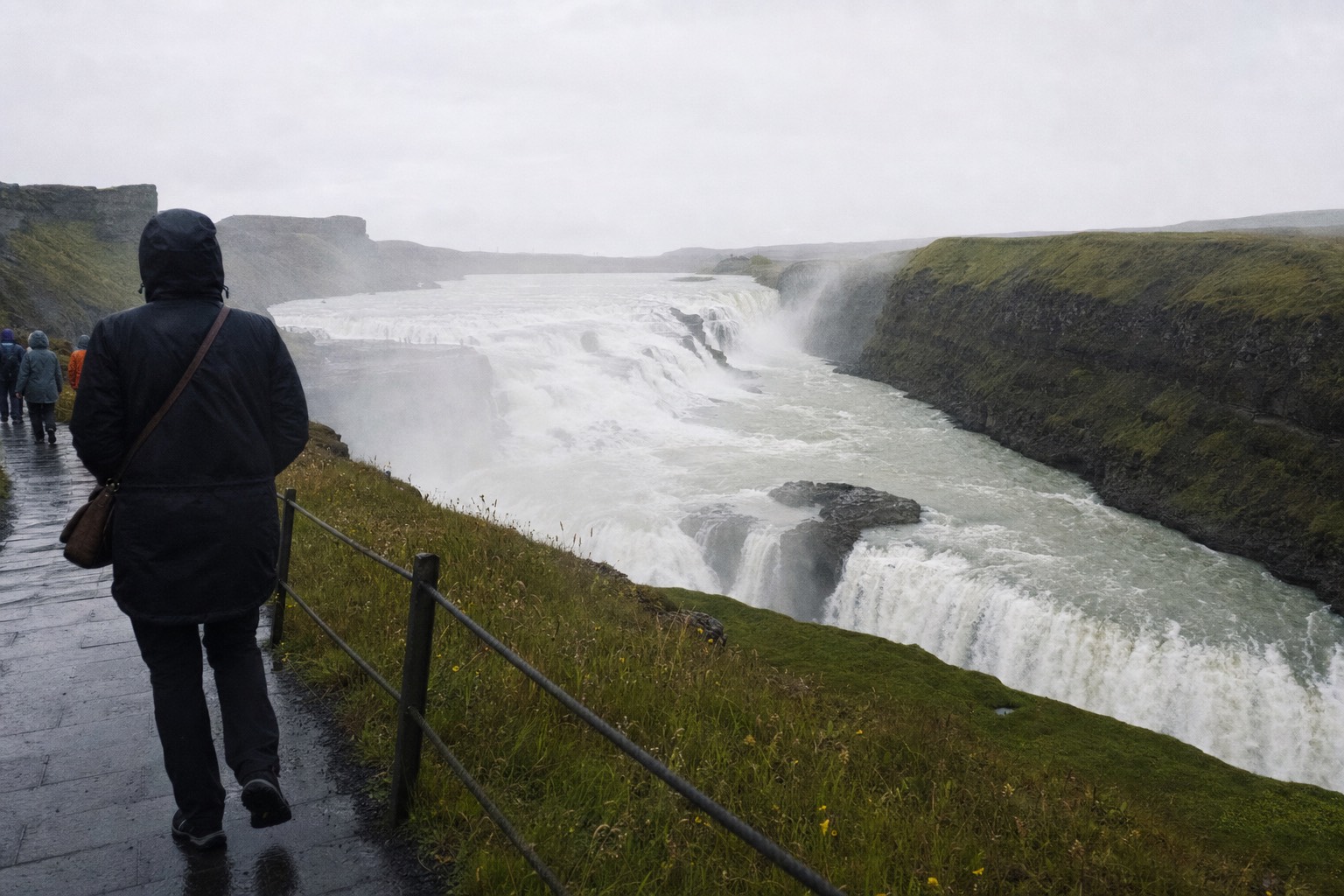
Spray from Gullfoss reaches the upper path before the waterfall itself comes into view. You hear it first, feel the mist second, and only then does the canyon open up below you. I have watched that moment land on strangers' faces for four years now, and it never gets old. But I also read the forums, and the same question keeps surfacing: is the Golden Circle actually worth it, or is it just the thing everyone does? Fair question. Here is my honest answer, with the numbers to back it up.
Booking choice: The classic route suits a first look at Iceland’s contrasts. Choose Brúarfoss for an added waterfall, Blue Lagoon for a long spa day, or the South Coast for a different landscape. Explore Classic Golden Circle
Is the Golden Circle worth it?
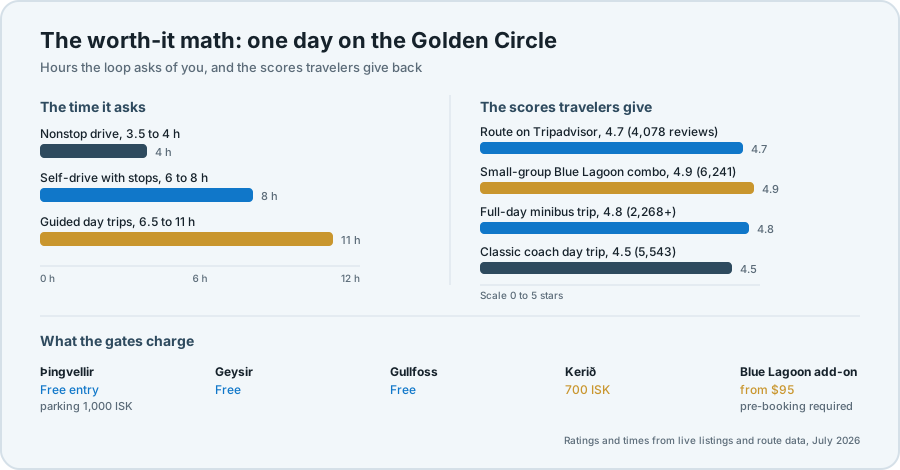
For a first trip to Iceland, yes. Travelers rate the Golden Circle route 4.7 out of 5 across 4,078 Tripadvisor reviews, and the day delivers three genuinely different sights: a rift valley, an erupting geyser, and a 32 m waterfall, all on paved roads within two hours of Reykjavík.
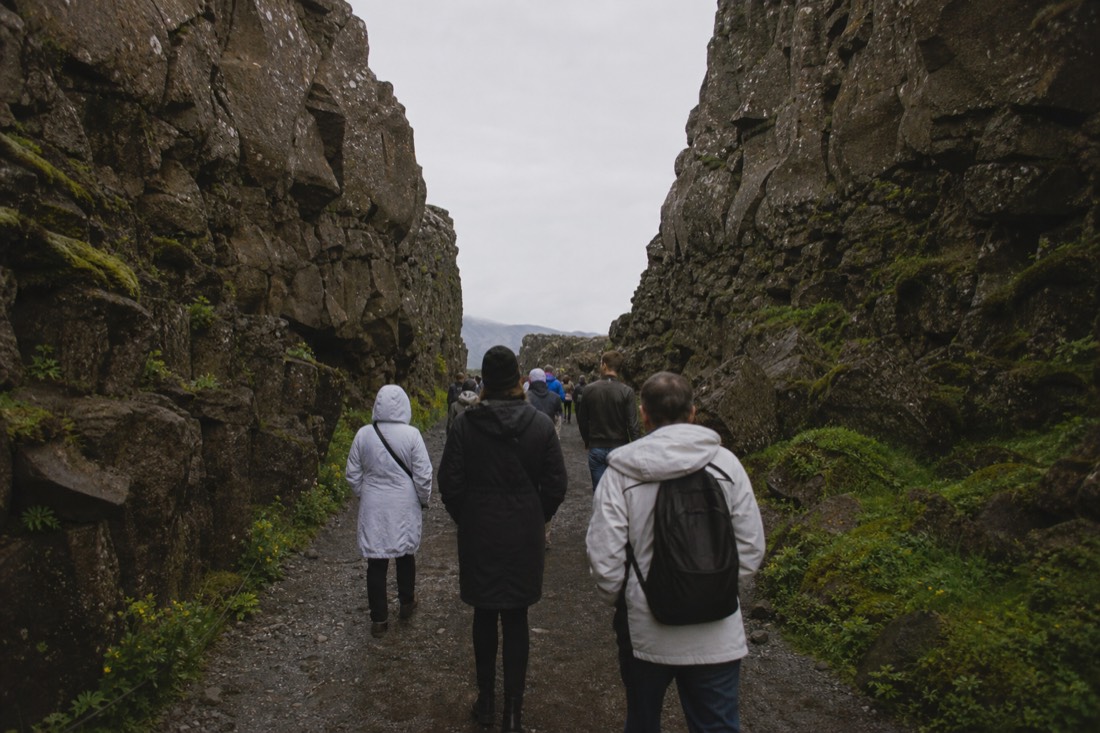
I moved to guiding full time in 2020 and onto this route in 2022, and I still think the skeptics get one thing wrong. They treat "popular" as a warning label. The route is popular because it condenses what makes Iceland strange into a single day: the ground literally pulling apart at Þingvellir, boiling water launching skyward at Geysir, glacial melt thundering into a canyon at Gullfoss. Nowhere else lets you touch all three phenomena between breakfast and dinner.
The review data agrees with me, and not by a little. Look at how the route and its most-booked day trips score right now:
| What travelers rate | Score | Reviews |
|---|---|---|
| Golden Circle route, Tripadvisor | 4.7 / 5 | 4,078 |
| Small-group Blue Lagoon and Kerið combo, Viator | 4.9 / 5 | 6,241 |
| Classic coach day trip, Viator | 4.5 / 5 | 5,543 |
| Full-day minibus trip, Viator | 4.8 / 5 | 2,268+ |
| Tomato farm and Kerið small group, GetYourGuide | 4.9 / 5 | 215 |
Tens of thousands of people have voted, and almost none of them regret the day. The pattern inside the reviews matters more than the averages, though. The complaints that do appear rarely say the sights disappointed. They say the traveler expected solitude and found a parking lot. That is an expectations problem, and it is fixable with timing, which I cover further down.
So my verdict is conditional but firm. If this is your first time in Iceland, the day earns its place. If you have done it before, spend your day elsewhere and feel no guilt.
What do you actually see in one day?
Three headline stops: Þingvellir National Park, where the North American and Eurasian plates pull apart; the Geysir field, where Strokkur erupts every five to ten minutes; and Gullfoss, a 32 m double cascade. Most tours add Kerið crater or the Blue Lagoon, and the whole loop runs about 300 km.
The roughly 300 km loop starts and ends in Reykjavík and stays on paved roads the entire way. First comes Þingvellir, the UNESCO site where Iceland's parliament first met in 930 and where you walk a gorge that is, geologically speaking, neither North America nor Europe. Entry is free. Most tours give it 30 to 45 minutes, enough for the Almannagjá walk and the viewpoint over the lake.
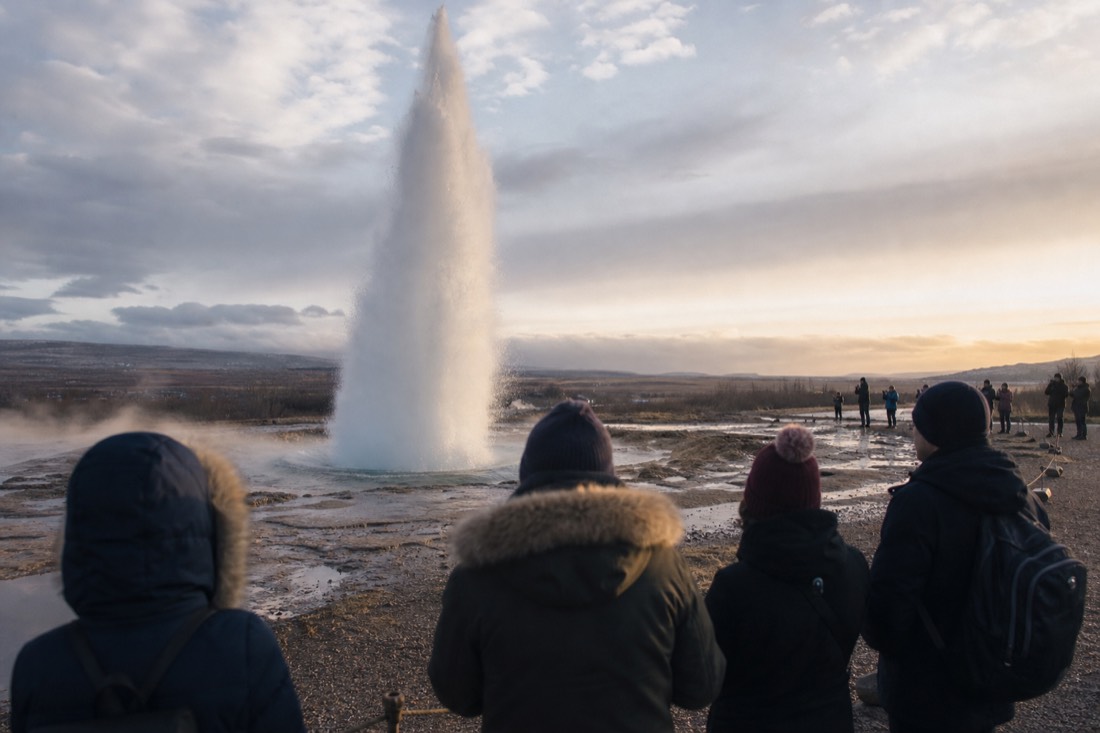
Geysir is next, and it is the crowd-pleaser. The original Geysir sleeps these days, but Strokkur beside it erupts every few minutes, usually five to ten, so nobody waits long. The water sits near 80 to 100°C, which is why the roped paths are not a suggestion. Then Gullfoss, the emotional peak of the day for most people: two tiers, 32 meters of drop, and a spray that finds you even on the upper platform. Note that the lower path closes when winter ice makes it dangerous.
| Stop | What it is | Gate cost | Typical tour stop |
|---|---|---|---|
| Þingvellir | Rift valley, UNESCO site, parliament founded 930 | Free (parking 1,000 ISK per car) | 30 to 45 min |
| Geysir | Geothermal field, Strokkur erupts every 5 to 10 min | Free | 45 min to 1 h 20 |
| Gullfoss | 32 m double waterfall | Free | 40 to 45 min |
| Kerið | Volcanic crater with a teal lake | 700 ISK | 30 to 45 min |
| Blue Lagoon | Geothermal spa add-on | Pre-book, from $95 | About 2 h on combo tours |
Longer itineraries bolt on Kerið's red-walled crater, the Friðheimar tomato greenhouse, or a closing soak at the Blue Lagoon. How much you can realistically fit depends on daylight and pace, and I break that down stop by stop in how long the route actually takes.
Are the tours worth it compared to driving yourself?
Tours win if you want zero driving stress and someone who knows the story of every stop; self-drive wins on flexibility. The three day trips I compare below run 6.5 to 11 hours, carry ratings between 4.5 and 4.9, and all cancel free up to 24 hours before departure.
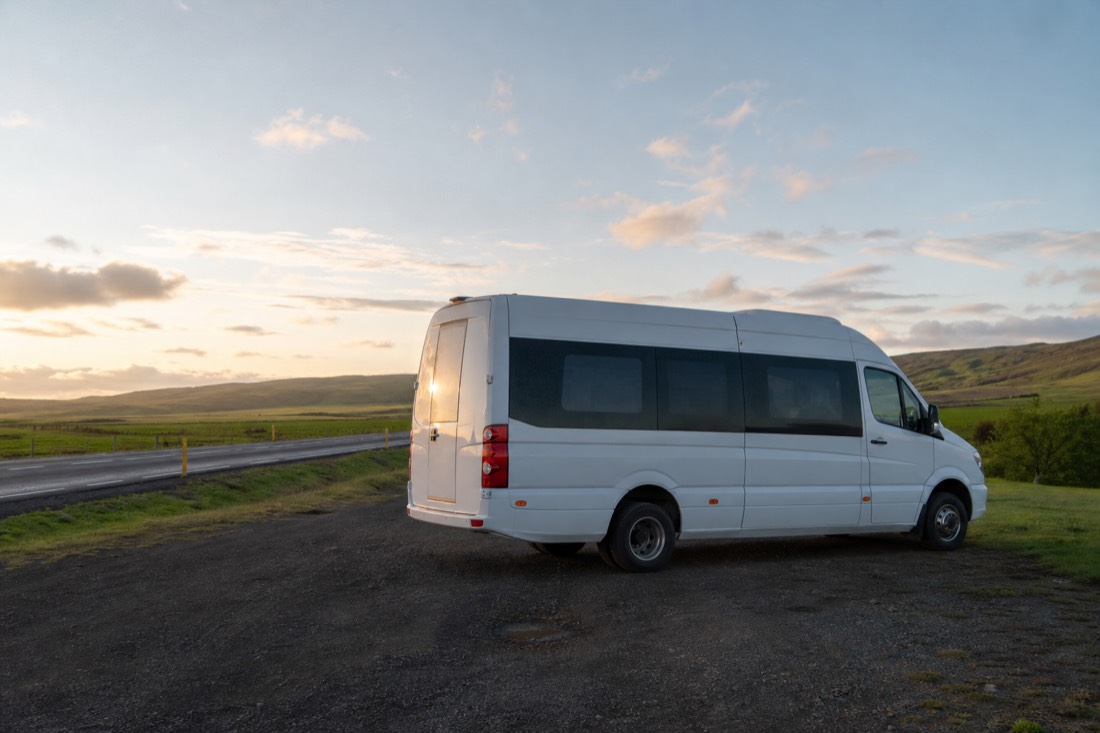
I will not pretend there is one right answer here, because the honest answer depends on you. Renting a car buys you sunrise starts and empty platforms. It also buys you winter driving on unfamiliar roads, parking machines, and a driver who misses half the scenery because they are watching the lane markings. A guided day trades flexibility for stories, logistics and a window seat. I lay out the full decision in tour or self-drive, compared properly, but here is the short version:
| Option | Duration | Group | What sets it apart | Rating |
|---|---|---|---|---|
| Small-group Blue Lagoon combo | ~11 h | Max 19 | Blue Lagoon and Kerið admission included | 4.9 (6,241 reviews) |
| Classic coach day trip | ~6.5 h | Coach, up to 100 | Shortest day, audio guide in 10 languages | 4.5 (5,543 reviews) |
| Tomato farm and Kerið small group | 9 h | Small bus | Friðheimar greenhouse stop, Kerið entry | 4.9 (215 reviews) |
| Self-drive | 6 to 8 h with stops | You | Total control of timing | n/a |
The pattern in those numbers is worth a second look. The small-group options outscore the big coach by nearly half a star, and travelers say the same thing in different words: nineteen people move through a stop faster and quieter than a hundred. If you only book one thing, book the Small-Group Blue Lagoon combo and check live availability and prices on Viator. It folds this whole article's question into one 11 hour day, 98% of its travelers recommend it, and Viator currently marks it "Booked 5+ times today." All three tours refund in full up to 24 hours out, so booking early costs you nothing but a decision.
Who should skip the route?
Skip it if this is your second visit and you have a rental car, if you have ten or more days and would rather spend them on the full Ring Road, or if crowds genuinely ruin places for you. The route is popular for good reasons, and it feels popular at midday.
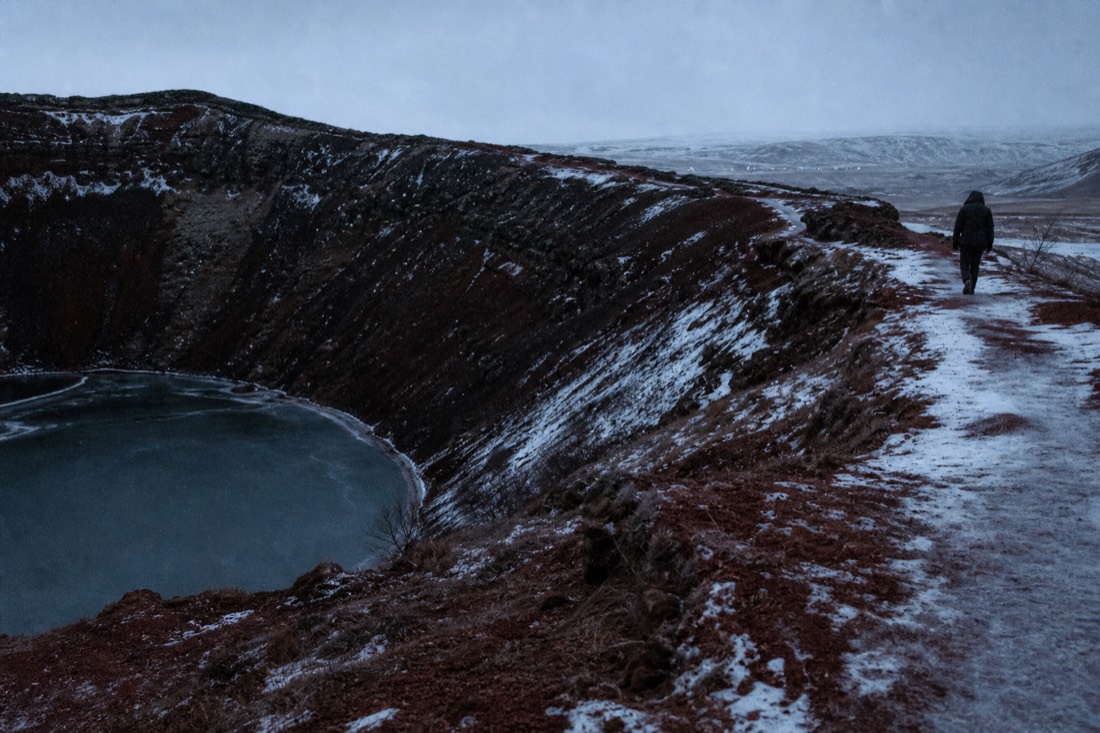
Three kinds of travelers genuinely should give it a miss, and I tell them so on the route itself. Repeat visitors first: the sights have not changed since your last trip, and your day is better spent on Snæfellsnes, the highlands, or the south coast waterfalls and black-sand beaches, which run as an easy guided day from Reykjavík if you would rather not drive; you can check price and dates here. Second, travelers with a long itinerary. The full Ring Road wants a minimum of seven days and rewards ten, and if you have that time, the Golden Circle's stops become a footnote to a much bigger story. I compare the two properly in Golden Circle or Ring Road, because they solve different trips.
Third, and I say this with love: if a busy viewing platform genuinely sours a place for you, and you are unwilling to start early or go late, this is not your day. Strokkur at 1 pm in July is a shared experience in every sense.
One group I push back on, though, is the "it's a tourist trap" crowd. A trap takes your money and underdelivers. The three headline sites here charge nothing at the gate. Whatever else the route is, it is not a trap.
How bad are the crowds really?
Midday in summer, Geysir and Gullfoss parking lots fill with coach traffic, and the Strokkur viewing rope gets three rows deep. Come before 9 am or after 5 pm and the same platforms feel half empty. Þingvellir absorbs people best; Kerið stays quiet most of the day.
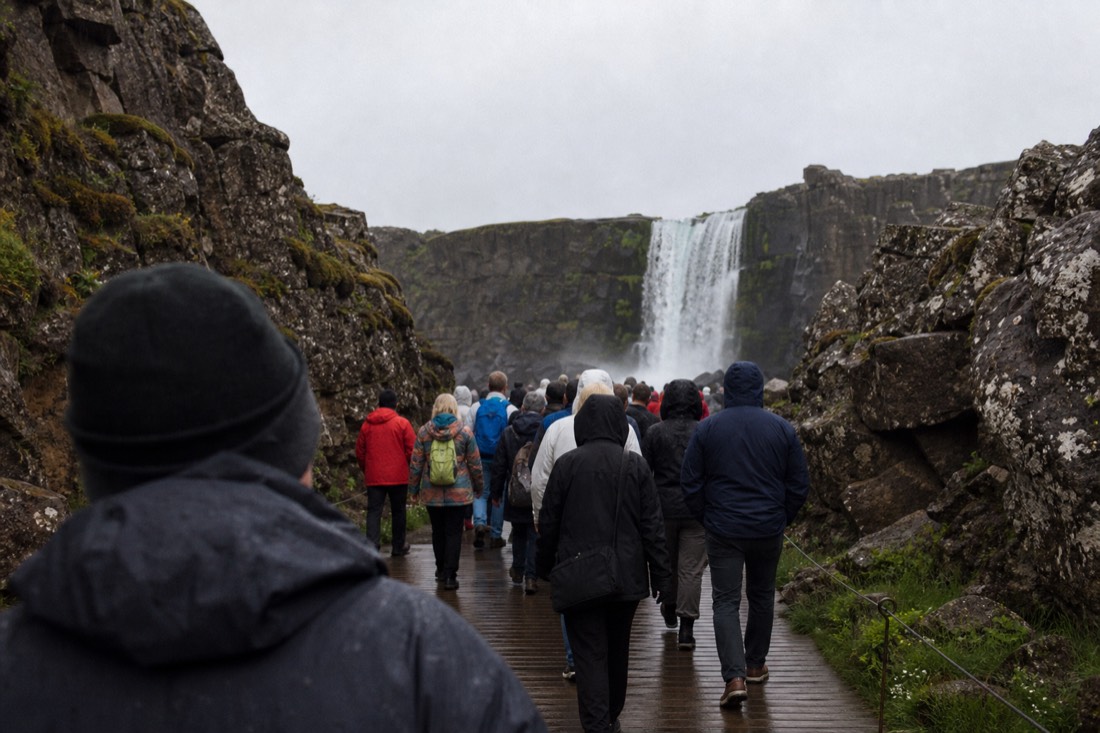
Let me describe what I actually see, week after week. The coach wave rolls through Geysir and Gullfoss between roughly 10:30 and 15:00, because most day trips leave Reykjavík between 8 and 9:30 and the drive spaces them out only so much. Inside that window, you will queue for the Gullfoss stairs and photograph Strokkur over someone's shoulder. Outside it, the route breathes. In June and July the daylight barely ends, so an evening self-drive can put you at Gullfoss at 9 pm with more birds than people.
Two things soften the crowding even at peak. Strokkur erupts every five to ten minutes, so the crowd churns; nobody camps a spot for an hour the way they do at scheduled shows elsewhere. And Þingvellir is a valley, not a viewpoint, so a thousand visitors disappear into it. The pinch points are really Gullfoss's staircase and the Strokkur rope, maybe 90 minutes of your day combined.
Winter flips the equation. Fewer visitors, but daylight shrinks toward four to five hours in December, which compresses everyone into the same short window. The upside is that the sights transform: Gullfoss half-frozen is a different waterfall, and the lower path's winter closure changes the view you get. Crowds are the route's one real cost, and also the most manageable one, because unlike the weather, they run on a timetable.
What does the day cost against what you get?
The three famous sites charge nothing at the gate. A self-drive day costs parking at Þingvellir, 1,000 ISK per car, plus fuel and 700 ISK if you add Kerið. Guided day trips start around 11,999 ISK on the cheapest direct coach, with richer combos priced live on their listings.
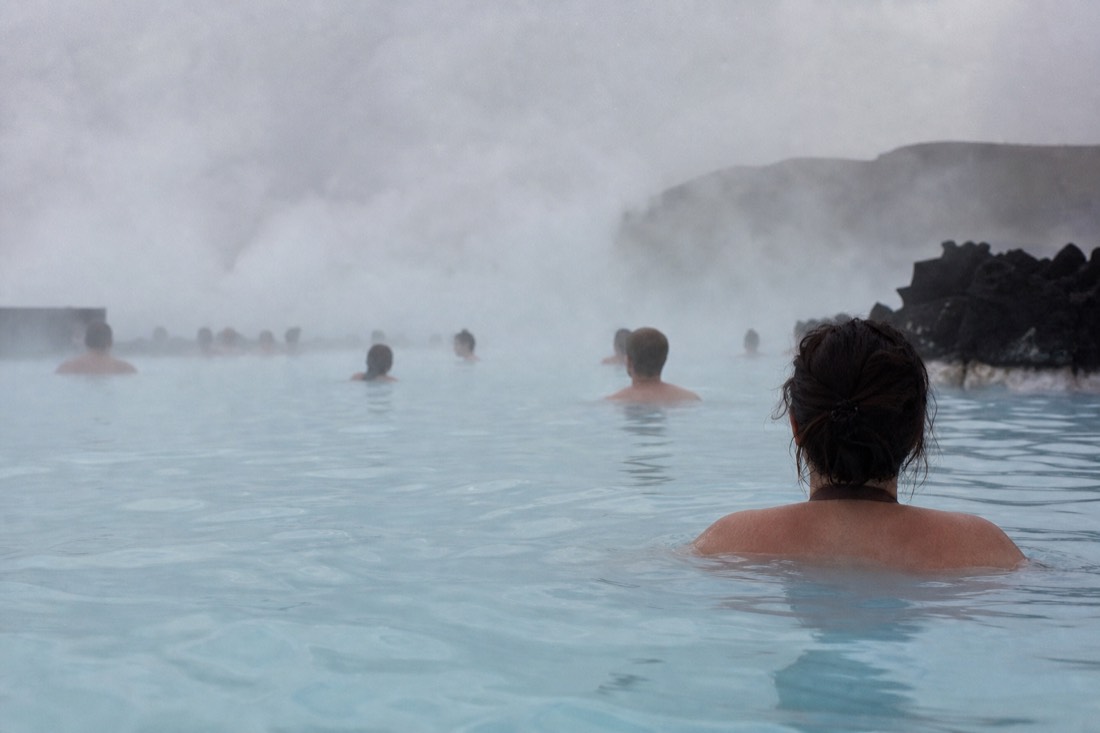
Iceland is an expensive country, which makes this route a quiet bargain. Þingvellir, Geysir and Gullfoss are all free to enter. The state charges 1,000 ISK per car to park at Þingvellir, Kerið's landowners charge a 700 ISK service fee, and that is the entire gate bill for a self-driven classic loop. Compare that with almost any famous sight in Europe and the value argument makes itself.
| What you might pay for | Cost | Notes |
|---|---|---|
| Þingvellir parking | 1,000 ISK per car | Entry itself is free |
| Kerið entry | 700 ISK | Optional crater add-on |
| Cheapest direct coach tour | From 11,999 ISK | Reykjavík Excursions direct tour |
| Tomato farm and Kerið small group | From $147 | Shown on the GetYourGuide listing |
| Small-group Blue Lagoon combo | Live price on the Viator listing | Includes Blue Lagoon and Kerið admission |
| Blue Lagoon on its own | From $95, pre-booked | Sells out; book ahead |
Set the bill against the return. One day, one tank of fuel or one tour seat, and you stand on two tectonic plates, watch the earth throw boiling water ten meters into the air, and feel a glacier river shake the ground under your boots. I have spent four seasons out here and I still have not found a better ratio of wonder to money anywhere in Iceland.
How does the Golden Circle compare to Iceland's other big days out?
The Golden Circle is the shortest, most varied day: a 300 km loop of rift valley, geyser and waterfall in about 6 to 8 hours. The South Coast trades some of that variety for waterfalls and a black-sand beach on a longer drive east, and Snæfellsnes is the far-flung "Iceland in miniature" for people who already did the Circle.
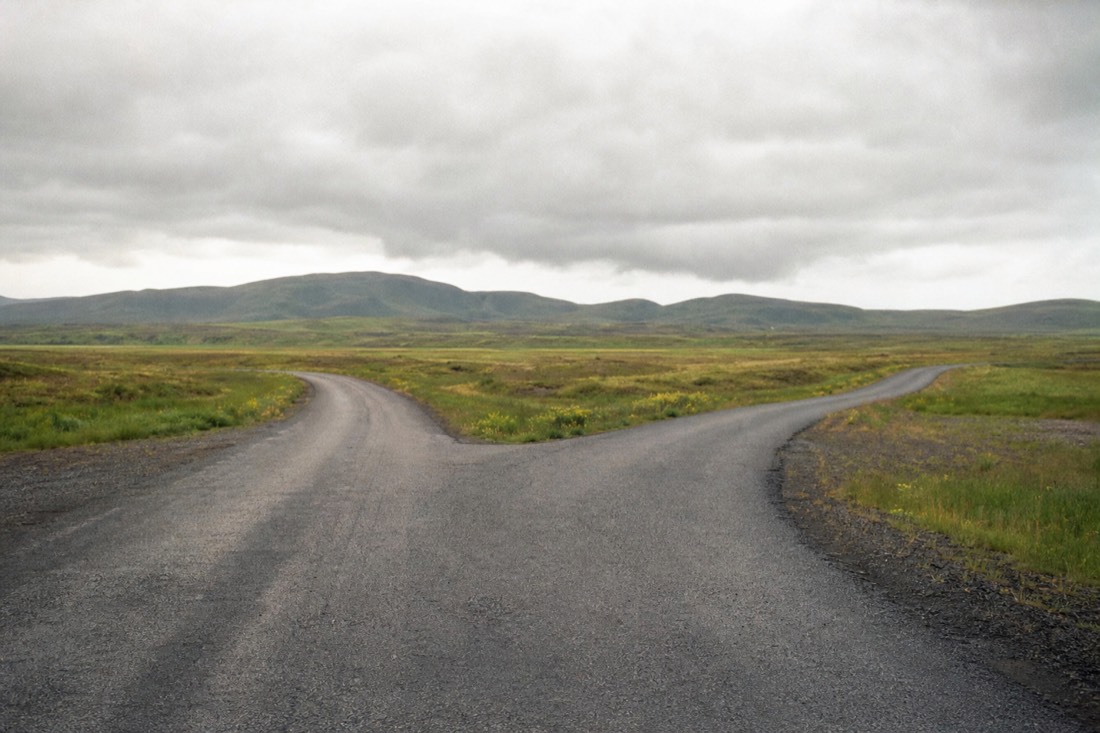
Almost everyone flying into Keflavík lands with the same three day trips on a shortlist, and they solve different cravings. The Golden Circle wins on density: three unlike phenomena, one paved loop, back in Reykjavík for dinner. The South Coast is a straighter, longer run east to the waterfalls at Seljalandsfoss and Skógafoss and the black basalt of Reynisfjara, the beach that stood in as Eastwatch-by-the-Sea in Game of Thrones. Snæfellsnes is the peninsula locals call little Iceland, with Kirkjufell, the pointed mountain from seasons six and seven, standing over it.
| Day trip | Time it takes | Headline sights | Gate cost | Best for |
|---|---|---|---|---|
| Golden Circle | About 6 to 8 hours with stops | Þingvellir rift, Strokkur geyser, Gullfoss | Free (parking 1,000 ISK per car) | A first trip, most variety in the fewest hours |
| South Coast | Full guided day, a longer drive east | Seljalandsfoss, Skógafoss, Reynisfjara black-sand beach | Free to visit the sights | Waterfall and black-beach drama |
| Snæfellsnes | Full guided day | Kirkjufell, lava fields, fishing villages | Free to visit the sights | A second trip once you have done the Circle |
The rating spread is tighter than the itineraries suggest. The Golden Circle route holds 4.7 from 4,078 Tripadvisor reviews. The most-booked South Coast day tours sit at 4.8, one on GetYourGuide carrying 12,188 reviews and its Viator sibling 6,364, so the quality gap is small and the choice comes down to what you want to look at. Wind and daylight decide more than any of that. In midwinter you get barely four and a half hours of light, which favors the tight Golden Circle loop over the long push to the South Coast or out to Snæfellsnes.
If you are weighing the biggest version of this decision, the full week on Route 1, I lay it out in Golden Circle or Ring Road. For a first week in Iceland, though, the loop's ratio of variety to hours is hard to beat.
What do repeat visitors do differently on a second trip?
They stop optimizing for price and start optimizing for quiet. Second-time visitors swap the big coach for a small-group van or a rental, hit Geysir and Gullfoss before 9 am or after 5 pm to dodge the 10:30 to 15:00 coach wave, and put their money into an add-on like Silfra or a glacier snowmobile instead of a third waterfall.
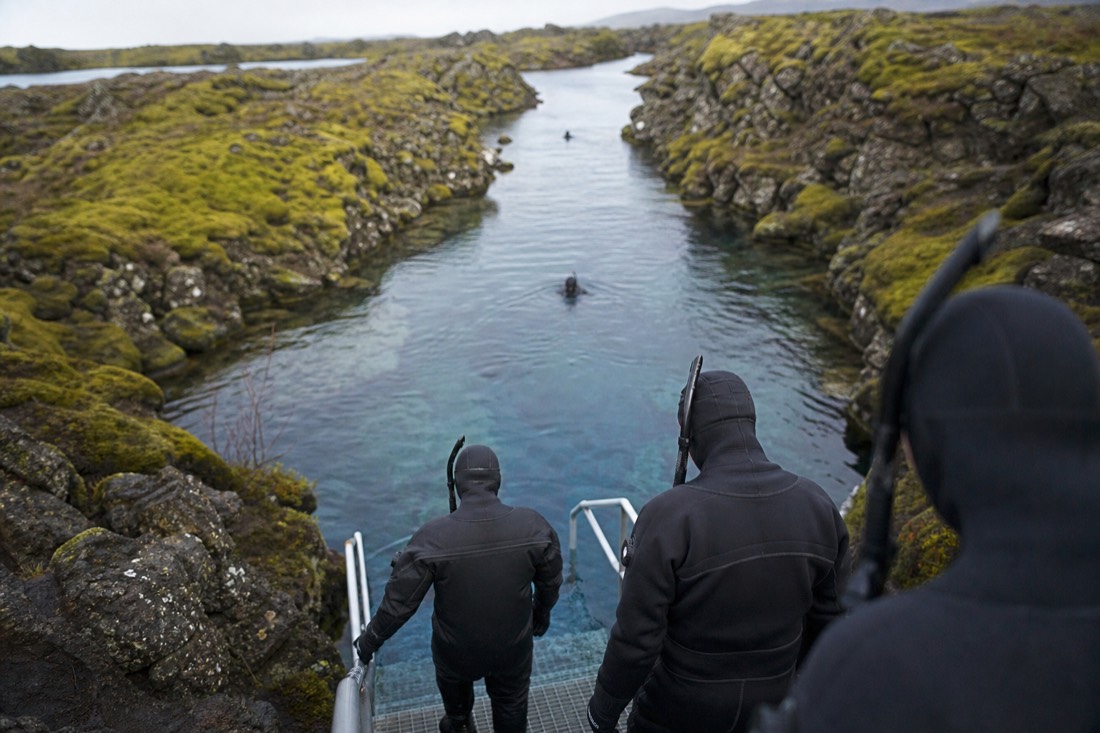
I guide the route week after week, and you can spot the returners fast. They are the ones already in the car park at half past eight, coffee in hand, while the first coaches are still loading in Reykjavík. Working since 2020 and on this loop since 2022, I have watched more than a thousand travelers move through these stops, and the second-visit pattern is consistent. First trips are about seeing everything. Second trips are about seeing it well.
| On the route | Typical first-timer move | What seasoned visitors do |
|---|---|---|
| Timing | Arrive inside the coach wave, 10:30 to 15:00 | Start before 9 am or come after 5 pm |
| Vehicle | Book the cheapest big coach, up to 100 seats | Switch to a small-group van (max 19) or self-drive |
| The soak | Default to the Blue Lagoon, from $95 | Trade to the Secret Lagoon, around 4,500 ISK, or skip it |
| The add-on | See the three sights and drive home | Add Silfra snorkelling, from ~19,990 ISK, or Langjökull snowmobiling, from ~33,990 ISK |
| Þingvellir | Photo at the viewpoint, back on the bus | Walk the full Almannagjá gorge down to Öxarárfoss |
The Silfra move is the one I most often watch click for people. On a first trip they photograph the rift from the path at Þingvellir; on a second, they book a dry suit and actually snorkel the flooded fissure between the two plates, in water clear enough to read a coin on the bottom. The glacier is the other upgrade. A Langjökull snowmobile run turns the drive past Gullfoss into a launch point rather than a turnaround.
The quiet-hunting is the deeper change, though. Once you know Strokkur fires every five to ten minutes, you stop treating it as a show you must catch and start timing the whole route around the coaches. Return visitors also lean into winter, when Gullfoss half-freezes and the crowds thin, even though December gives barely four and a half hours of daylight. If that is you, my winter guide covers the short-day math, and tour or self-drive settles the vehicle question.
What could turn the day into a letdown, and how do you avoid it?
Four things do it: wind rather than rain, the midday crowd crush, a coach that rushes the stops, and a path roped off in winter ice. Each one is predictable, and each one has a fix you can apply before you leave Reykjavík. Get the timing and the forecast right, and the letdowns mostly vanish.
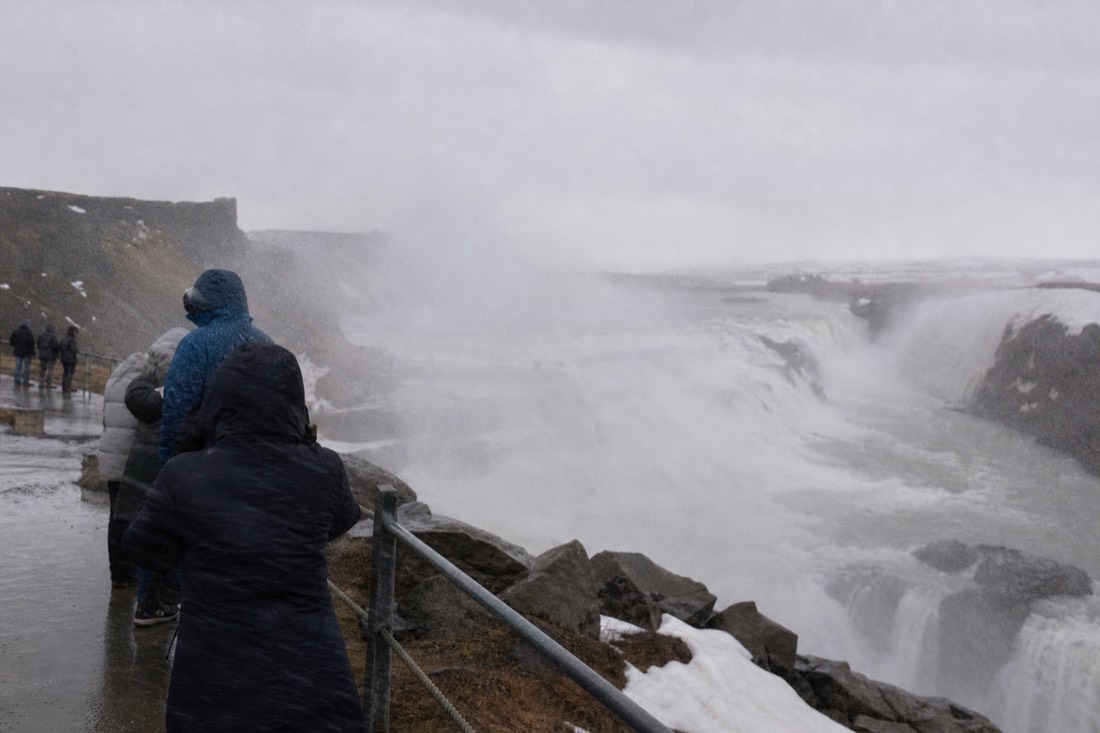
The disappointed reviews almost never blame the sights themselves. They blame a version of the day that was avoidable. Here is what actually goes wrong, and what I tell people to do about it.
| What can spoil the day | Why it happens | How to dodge it |
|---|---|---|
| Wind, not rain | Open platforms at Gullfoss and Geysir catch the gusts, and winter roads ice over | Check vedur.is and road.is the morning of, and let a guided tour carry the driving in winter |
| Crowded platforms | The coach wave lands between 10:30 and 15:00 | Reach Geysir and Gullfoss before 9 am or after 5 pm |
| A rushed feeling | Budget coaches give Þingvellir as little as 30 minutes when it earns 45 to 75 | Pick a tour that dwells longer, or self-drive at your own pace |
| A closed path | Gullfoss's lower path ropes off in winter ice, and Geysir's paths are roped near boiling ground | Take the upper platform in winter, and never cross a rope by the hot springs |
Wind is the spoiler people underrate. Rain barely dents the route, since Strokkur erupts wet or dry and Gullfoss arguably looks better under moody cloud, but a hard Icelandic gust turns the open platforms miserable and, in winter, makes the roads the real hazard. That is why I steer nervous winter drivers toward a guided seat: the roads stay open year-round but run icy, and letting someone else watch the ice is worth the ticket. A quick look at vedur.is and road.is on the morning of tells you most of what you need.
Pace is the other quiet killer. The cheapest coaches keep to a tight clock, and 30 minutes at Þingvellir is enough for the viewpoint but not the gorge, when the site really wants 45 to 75. If the valley matters to you, read the stop times before you book; I break them down in how long the route takes. And respect the ropes. At Geysir the water sits near boiling, 80 to 100°C, and the roped paths are not decoration. At Gullfoss the lower path simply closes when ice makes it dangerous, so a winter visit is an upper-platform visit, and that is fine.
Quick answers before you decide
Is one day really enough for the Golden Circle?
Yes. The loop is about 300 km and drives in 3.5 to 4 hours nonstop, so even with generous stops at all three headline sites plus Kerið, you fit it into 6 to 11 hours. Multi-day versions exist, but they are a luxury, not a necessity.
Do I need to book anything in advance?
The three main sites need no tickets. The Blue Lagoon is the exception: it requires pre-booking and starts from $95, and it does sell out. Guided day trips are smart to reserve early too, since all three I recommend cancel free up to 24 hours before departure.
Is the route still worth it in bad weather?
Usually, yes. Strokkur erupts in rain, and Gullfoss arguably looks better under moody skies. Wind is the real spoiler, more than rain. In winter, check conditions the morning of, and let a tour operator carry the driving risk if forecasts look rough.
Check your date before arranging the rest of your trip
General recommendation — confirm your party, pickup and requirements on the booking page.
Classic Golden Circle
The three main sights with an English-speaking guide and coach transport.
6½ hours · English · Meals extra. Select BSÍ or an offered pickup point; central hotels often use bus stops.
Scheduled dates from Viator. Availability and final price are confirmed on Viator.
Affiliate links: we may earn a commission at no extra cost to you. Product details checked 16 September 2026.