Tour or Self-Drive? An Honest Golden Circle Verdict
Both options end at the same waterfalls, geysers and rift walls. The difference is what happens in between, your hands on the wheel or your face on the glass.
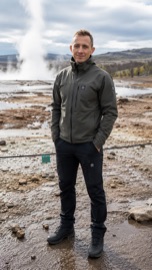 Written with Björn Einarsson, Iceland Golden Circle tour guide and local specialist
Short answer
Most first-timers, and nearly everyone visiting November through March, get more from a guided tour, with no ice driving, no insurance excess, and a guide filling in the story. Rent a car if you travel in summer, drive confidently, and want empty car parks at 10 pm under the midnight sun.
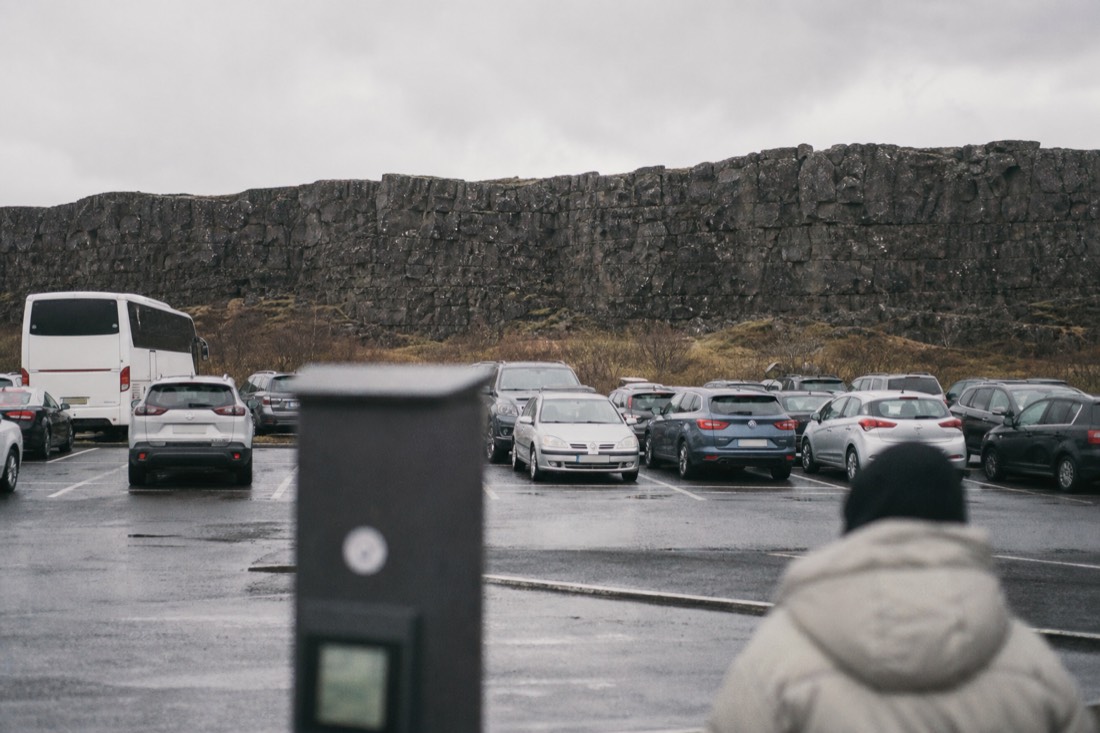
Stand in the Þingvellir car park on a dark February morning and the whole debate plays out in front of you. A rental hatchback slides in with its wipers fighting sleet, the driver squinting at the parking payment sign. Two minutes later a coach hisses open its doors and forty warm, rested people walk straight past the machine, because their ticket already covers it. I guide on this road most weeks, and I have done the loop both ways more times than I can count. Neither option is wrong. One of them is usually right for the specific trip you are about to take, though, and the calendar decides more than most people expect.
Booking choice: Compare full party totals, not a per-person tour headline against a daily car rate. A private tour buys a vehicle for your group; a coach buys seats. Explore Classic Golden Circle
Should you drive the route or take a tour?
Take a tour if this is your first Iceland trip or you are coming between November and March. Drive yourself if it is summer, you are comfortable on rural roads, and you want to linger past the day-tour window. The route itself is easy by Icelandic standards: about 300 km, fully paved, doable in 3.5 to 4 hours without stops.
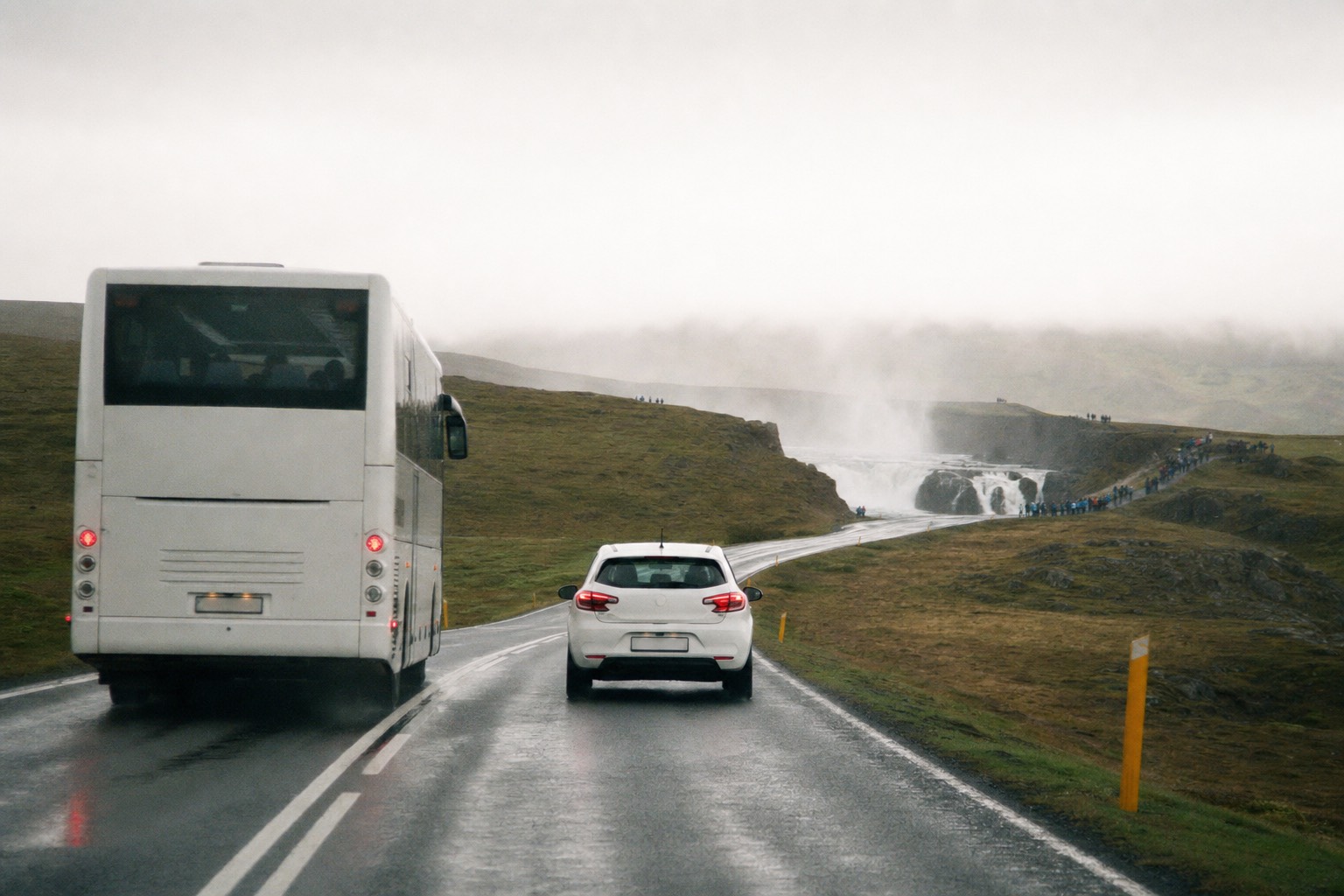
On paper the drive is nothing. The loop runs roughly 300 km on routes 36, 365, 37 and 35, every metre paved, and with no stops you would be back in Reykjavík in under four hours. The three headline stops sit right along the way, and I have broken down every pull-off worth your time in the stops and map guide. A guided coach covers the same circuit in 6.5 to 11 hours depending on how many extras it folds in.
So the question is not whether you can do it yourself. Most people can, most of the year. The question is what kind of day you want and what month the calendar shows. In July I tell my own cousins to rent the smallest car available and go. The roads are dry, the light never really leaves, and the route forgives mistakes. In January I watch visitors white-knuckle the same bends I drive daily, and I tell almost everyone to take the coach.
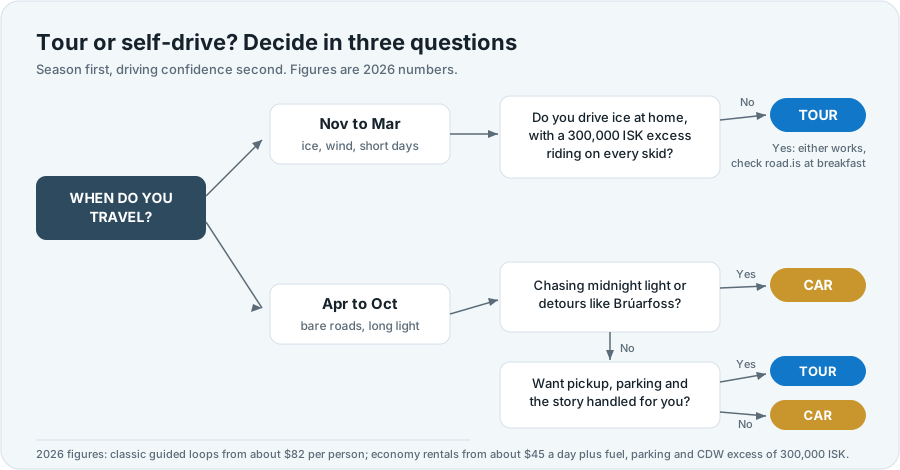
Three things should settle it: the season, your honest confidence on rural winter roads, and how much you care about context versus freedom. Money matters less than people assume, because the two options land closer together than the internet suggests once insurance and parking enter the sum. The exact numbers are next.
There is also a version where you do both. Plenty of my guests drive the loop in summer, love it, then come back in February and book a seat because they have no interest in learning ice driving on holiday. Nothing about this choice is permanent.
What does each option cost side by side?
For two people, self-driving usually lands between $100 and $200 all-in: an economy rental from about $45 a day in winter, plus fuel and parking. Classic guided day trips start around $82 per person in 2026, so roughly $164 for two. On paper the car edges it. The gap closes fast once insurance enters the picture.
| Cost line | Self-drive, two people | Guided tour, two people |
|---|---|---|
| Base price | Economy rental from about $45 a day in winter | Classic day trips from about $82 per person |
| Fuel for the ~300 km loop | Inside the $100 to $200 all-in range | Included in the ticket |
| Parking at Þingvellir and Geysir | 1,000 ISK per car at each, about $16 total | Covered or handled by the operator |
| Kerið crater | 700 ISK per person | Included on the two tours that stop there |
| Insurance exposure | Basic CDW excess up to 300,000 ISK, about $2,350 | None |
| Realistic day total | $100 to $200 all-in | From about $164 for two, live prices on each listing |
The full cost breakdown goes deeper, but the short version is that the sticker gap is real and smaller than it looks. Parking is now charged at the two busiest stops: Þingvellir takes 1,000 ISK per car, the Geysir car park matches it at 1,000 ISK, and Gullfoss stays free. Kerið collects a 700 ISK service fee per person however you arrive.
The line that actually swings budgets is insurance. Basic CDW on an Icelandic rental typically leaves you holding an excess of 300,000 ISK, about $2,350, if the car gets damaged. Gravel chips and wind-caught doors are exactly what that excess exists for. Buying the damage down costs extra per day, and suddenly the $45 rental is not $45.
One honest note on the tour column: the two Viator-listed trips on this site only show their exact price inside the booking flow, so treat $82 as where the classic market starts rather than any specific listing's number. Reykjavík Excursions' comparable direct tour lists from 11,999 ISK, which tells you the range stays competitive.
When does self-driving win?
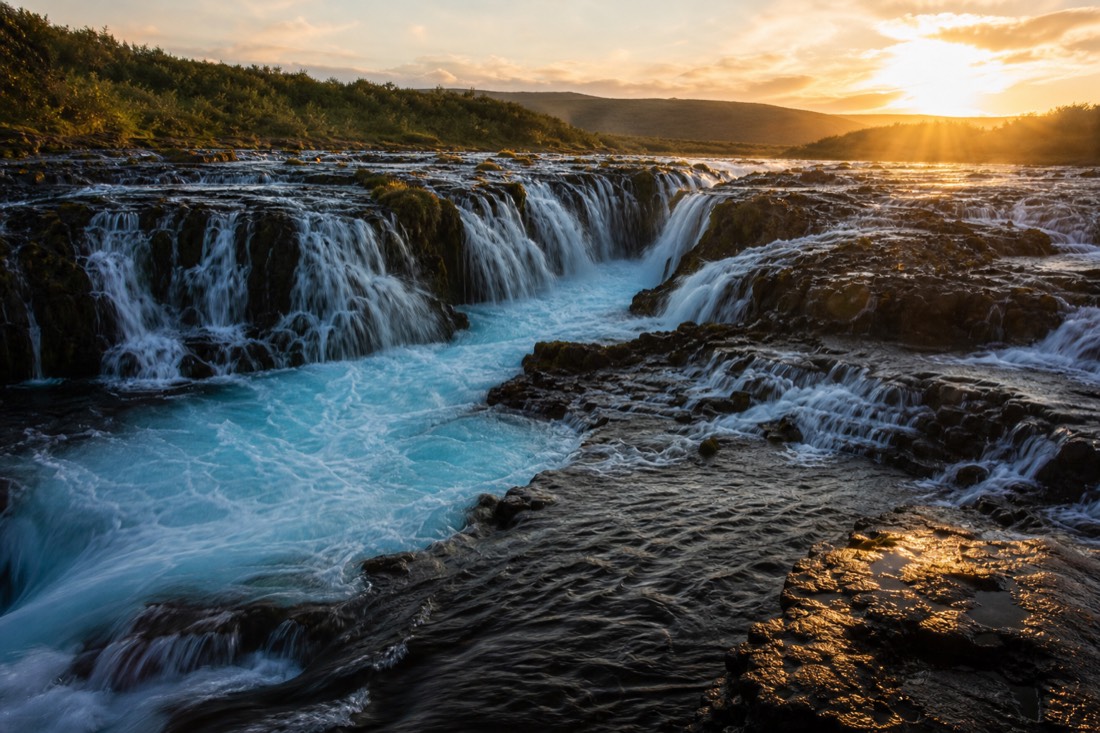
Summer, flexible schedules, and light-chasers. Between May and September the roads are bare, daylight barely ends, and a car lets you shoot Gullfoss at 11 pm after the day-trip crowds are gone. Photographers, families needing their own rhythm, and anyone stacking detours like Brúarfoss or Friðheimar get real value from the wheel.
| Your trip | Better fit | The deciding factor |
|---|---|---|
| First visit, November to March | Tour | Ice, wind and short daylight stack against new drivers |
| Summer photographer | Car | Golden light near midnight, long after the coaches leave |
| Family with young kids, summer | Car | Your own schedule for naps, snacks and moods |
| Solo traveler, any season | Tour | One seat costs less than a rental day plus fuel for one |
| Detour collector: Brúarfoss, Faxi, Friðheimar | Car | Tours hold the main line; side stops need your own wheels |
| Anyone allergic to logistics | Tour | Pickup, parking, timing and weather calls all handled |
June and July are the cheat code. Sunset and sunrise blur into one long golden hour around midnight, and the difference between standing at Gullfoss at noon and at 10 pm is the difference between sharing it with a thousand people and hearing nothing but water. No scheduled coach gives you that hour. Self-drivers also unlock the small stuff: Faxi just off route 35, the impossibly blue braids of Brúarfoss, a slow tomato soup lunch at Friðheimar timed to whenever you feel like arriving. If your trip is built around photographs or around small children, the car pays for itself in freedom rather than króna.
When does a tour win?
Winter, first visits, and anyone who wants the day handled. From November to March a tour removes ice driving, the 300,000 ISK insurance excess, and a week of anxiously watching forecasts. You also gain a guide's running story, which turns three pretty stops into one connected place instead of a photo checklist.
| Option | Day length | Group | What is handled for you |
|---|---|---|---|
| Self-drive | 3.5 to 4 h driving plus your stops | Your car | Nothing, and that is the point |
| Classic coach loop | About 6.5 h | Coach, up to 100 | Guide, Þingvellir admission, optional pickup, audio guide in 10 languages |
| Small-group farm and crater trip | 9 h | Small group | Driver-guide, hotel pickup, Kerið entry, Friðheimar stop |
| Small-group Blue Lagoon combo | About 11 h | Max 19 | Guide, hotel pickup, Blue Lagoon and Kerið entry |
All three tours I track cancel free up to 24 hours before departure, which matters in a country where the forecast rewrites itself overnight. In winter the case becomes one-sided: a professional watches the road reports, drives the ice, and makes the go or no-go call while you drink coffee. That is not laziness, it is risk transfer, and it is cheap at the price.
If the winter maths pushes you toward a seat, book the classic day trip and check live availability and prices on Viator. It is the shortest full loop of the three, departs from the BSÍ terminal in Reykjavík, and its 4.5 rating across 5,543 reviews comes largely from people doing exactly what you are deciding now: first loop, no car.
How hard is the driving in winter?
Harder than the distance suggests. The roads are paved but exposed, storms close sections of the route in bad winters, and daylight shrinks to a few hours by December. Check road.is and safetravel.is the night before and again at breakfast. If the map shows red or impassable, the decision has been made for you.
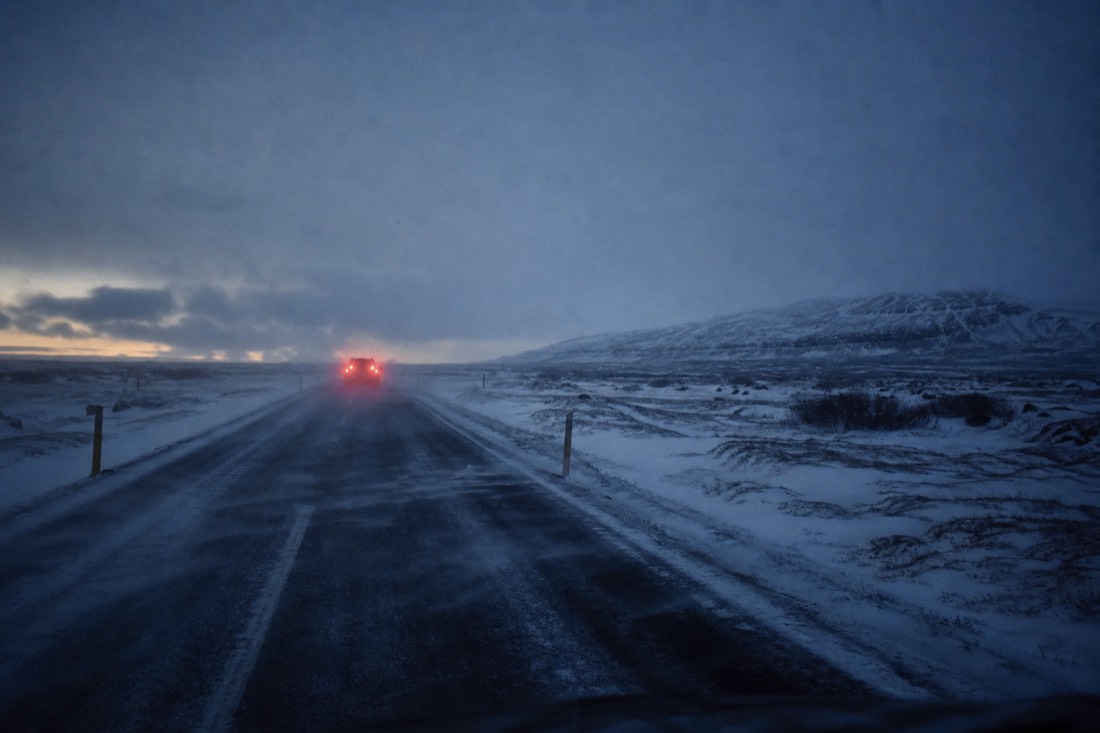
Respect it without fearing it. This is lowland driving on paved roads, which makes it one of the easier winter routes in Iceland, and that is a relative statement. Route 36 toward Þingvellir crosses open heath where wind pushes snow across the lane faster than ploughs clear it. Black ice forms in the shaded bends and sits there past noon. When the color-coded map at road.is turns red, that is a closure, not a suggestion, and Safetravel pushes the same alerts to your phone if you register your travel plan. The wind forecast at vedur.is decides something smaller but expensive: whether opening your car door becomes an insurance event.
The stops change too. The lower path at Gullfoss closes when winter ice makes it dangerous, so cold-season visitors see the falls from the upper platform. December daylight compresses the whole loop into a tight window and puts part of your driving in the dark.
None of this is a reason to skip Iceland in winter. It is a reason to be honest about your ice experience. If you drive snow at home every year, rent the car, check the map twice a day and go. If your winter driving résumé is one ski trip years ago, the coach exists for you. My winter guide covers what the season does to each stop in detail.
What do self-drivers miss without a guide?
The stories, mostly, and the timing tricks. Þingvellir is a rift between two tectonic plates and the site of a parliament founded in 930, yet those layers are easy to walk past unnoticed. A guide also knows where to stand at Strokkur, which erupts every five to ten minutes, and which side the spray lands on.
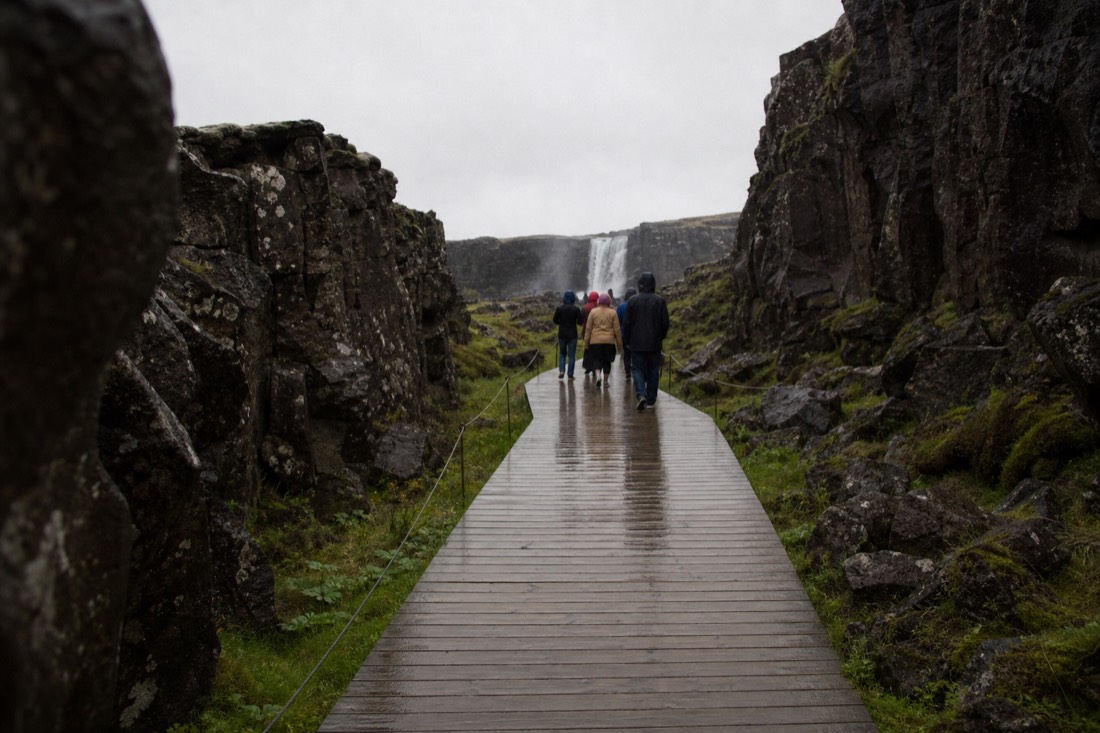
Nothing at Þingvellir announces itself. You park, walk a gorge, find it pretty, leave. What you walked was Almannagjá, the torn edge of the North American plate, with the Eurasian side visible across the valley, and the flagpole marks the spot where Icelanders founded a parliament in 930 and recited law aloud for centuries. I have watched self-drivers give the place eleven minutes. With someone connecting those threads, the same gorge takes forty-five and lands completely differently.
Small tactical wins add up as well. At Strokkur the wind decides which side of the circle gets soaked, and guides quietly steer their groups upwind before the eruption. We know when the Öxarárfoss boardwalk turns to glare ice before any sign says so, which Gullfoss platform stays sheltered in a north wind, and how to time Geysir's crowds against the coach schedules.
Fairness demands the other side: none of this is secret. A self-driver who reads up the night before, downloads an audio guide, and gives Þingvellir a real hour loses very little of the substance. The gap is not information anymore, it is attention. A driver watching a winter road cannot watch the landscape, and in my experience whoever holds the wheel sees the least of the Golden Circle that day.
What does renting a car for the route actually involve?
Renting means clearing a short checklist before the fun part: a valid licence, an age the company accepts, and one insurance decision that matters. Basic CDW still leaves you owing up to 300,000 ISK, about $2,350, on damage, so most people buy that excess down. Then you fuel the car and pay for parking yourself.
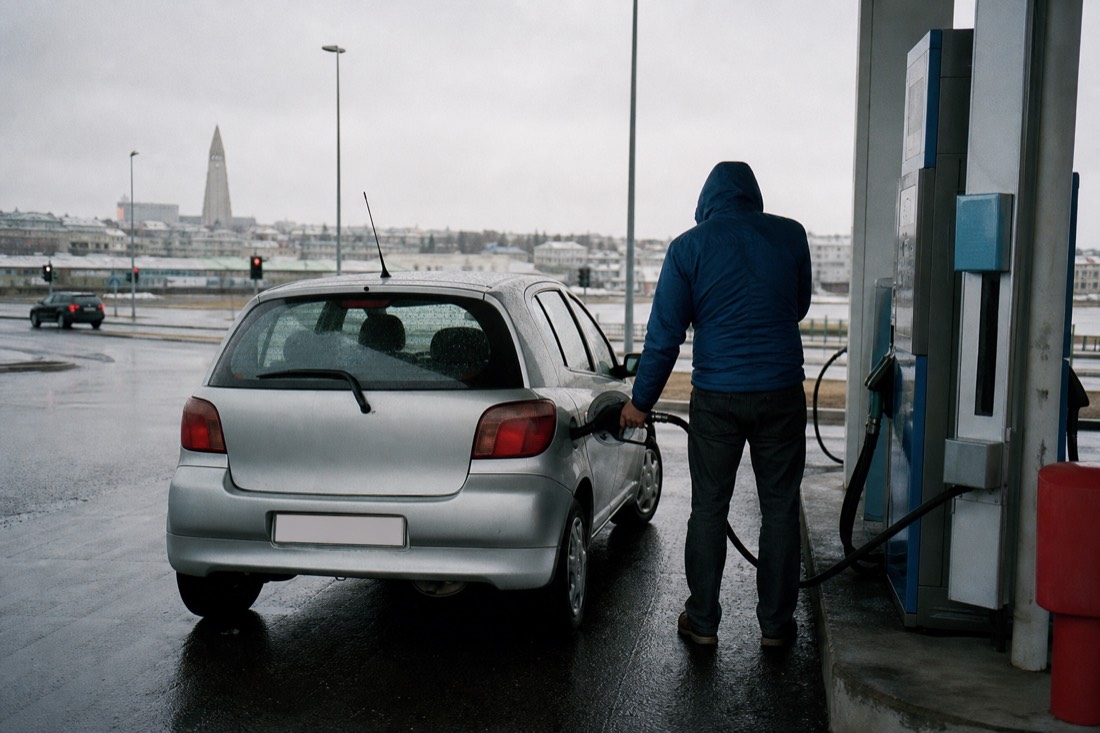
The paperwork is quick, but a couple of lines on it decide whether the loop costs you $150 or a lot more. Here is what I tell friends to sort before they pick up the keys.
| What to sort out | Why it matters on this loop | The figure or check |
|---|---|---|
| Driving licence | Rentals want a full licence in Roman script; bring an International Driving Permit if yours is not | Carry the physical card, not a phone photo |
| Minimum age | Companies set their own age floor and often add a young-driver fee below it | Confirm the age rule when you book |
| Basic CDW excess | The damage you still owe after basic cover, exactly where chips and wind doors land | Up to 300,000 ISK, about $2,350 |
| Gravel Protection | Covers stone chips to paint, lights and windscreen, common along route 35's edges | Optional add-on, priced per day |
| Sand and Ash Protection | Covers paint stripping in a southern ash or sandstorm | Optional add-on, priced per day |
| Fuel | You fill it at the pump; match petrol or diesel to the car before you squeeze the trigger | Petrol near 216.70 ISK per litre in mid-2026 |
| Parking payment | Þingvellir and Geysir bill by camera and plate, not a barrier arm | 1,000 ISK per car at each |
The licence part trips up more people than it should. A full licence in the Roman alphabet is usually fine; if yours is in another script, an International Driving Permit alongside it saves an argument at the desk. Age rules are set by each rental company rather than the state, so the floor and any young-driver surcharge are worth reading before you commit.
Insurance is where the real money hides. Every economy car comes with basic CDW built in, and every basic CDW leaves an excess you personally cover if the car is damaged. On Icelandic rentals that excess runs up to 300,000 ISK, roughly $2,350, and the two things most likely to trigger it are a stone off route 35 and a door caught by the wind. That is why Gravel Protection and Sand and Ash Protection exist as named add-ons here and almost nowhere else. Neither is a legal requirement. Both buy down risk that this specific landscape hands you.
Then there are the running jobs a coach ticket quietly absorbs. You fuel the car yourself at a self-service pump, and petrol sat near 216.70 ISK a litre in mid-2026, so budget the full 300 km. Parking is now camera-enforced at the two busy stops, 1,000 ISK per car at each, read automatically off your plate, with Gullfoss still free. The full cost breakdown stacks all of this against a tour ticket, but the headline is simple: the rental sticker is the start of the sum, not the end of it.
How do a tour and a self-drive compare on a bad-weather day?
They diverge most when the weather turns. On a light-snow day both still run. On a storm day the tour operator carries the risk and the go or no-go call, while a self-driver owns both. If road.is shows red the route is closed for everyone, yet only the tour refunds you for the lost day.
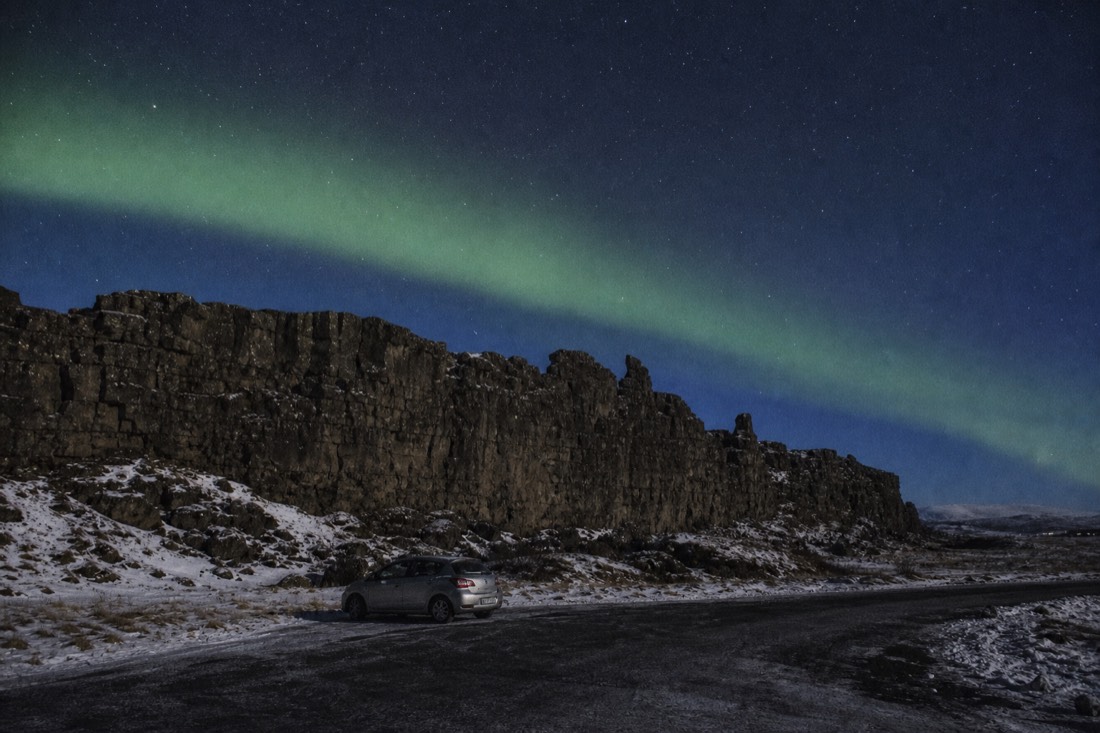
Iceland does not hand you one weather. It hands you four in a morning, and the right choice flips with each. Here is how a single rough day plays out on both sides of the decision.
| The day throws at you | Self-drive | Guided tour |
|---|---|---|
| Light snow, roads open | You drive it slower, on winter tyres and full concentration | The coach rolls on schedule while you watch the heath slide past |
| Storm warning, amber wind | Your call, and one open door in a gust can become a 300,000 ISK excess claim | The operator reads vedur.is and makes the call for you |
| Road closed, red on road.is | Your day is off and the rental clock keeps ticking | The tour reschedules or refunds; free cancellation to 24 hours |
| Clear aurora night | You can sit at Þingvellir past midnight under the lights | A day tour dropped you back at your hotel hours earlier |
Light snow is the honest middle. Both options run, the roads stay open, and the only real difference is who is concentrating. Behind the wheel that is you, for three or four hours, with black ice sitting in the shaded bends past noon. On the coach it is a professional who drives this in December for a living.
A storm warning changes the character of the day entirely. Winter temperatures on the loop sit between -5°C and 2°C, and wind, not cold, is the expensive part. Amber gusts turn a car door into an insurance event and a windscreen into a target. When the operator watches vedur.is and decides not to run, that judgement is included in your ticket. When you make the same call alone, you are also weighing a rental you have already paid for.
A red closure on road.is removes the choice for everybody. The difference is only who absorbs it. All three tours on this site cancel free up to 24 hours out, so a grim forecast costs you a reshuffle rather than money, a point my winter guide leans on hard. The one column where the car wins outright is the clear aurora night. December gives Reykjavík barely four and a half hours of daylight, but a still, cold evening can light up green, and only your own car lets you park at Þingvellir at midnight to watch it. No scheduled coach waits that long.
What Björn watches self-drivers get wrong on the route
From the guide seat I see the same handful of errors most weeks. Too much speed carried onto gravel edges that chips a windscreen, a walk straight past the parking machine, and a car door flung open into an Icelandic gust. None of them look dramatic in the moment. Each one can turn a cheap rental day into an insurance excess.
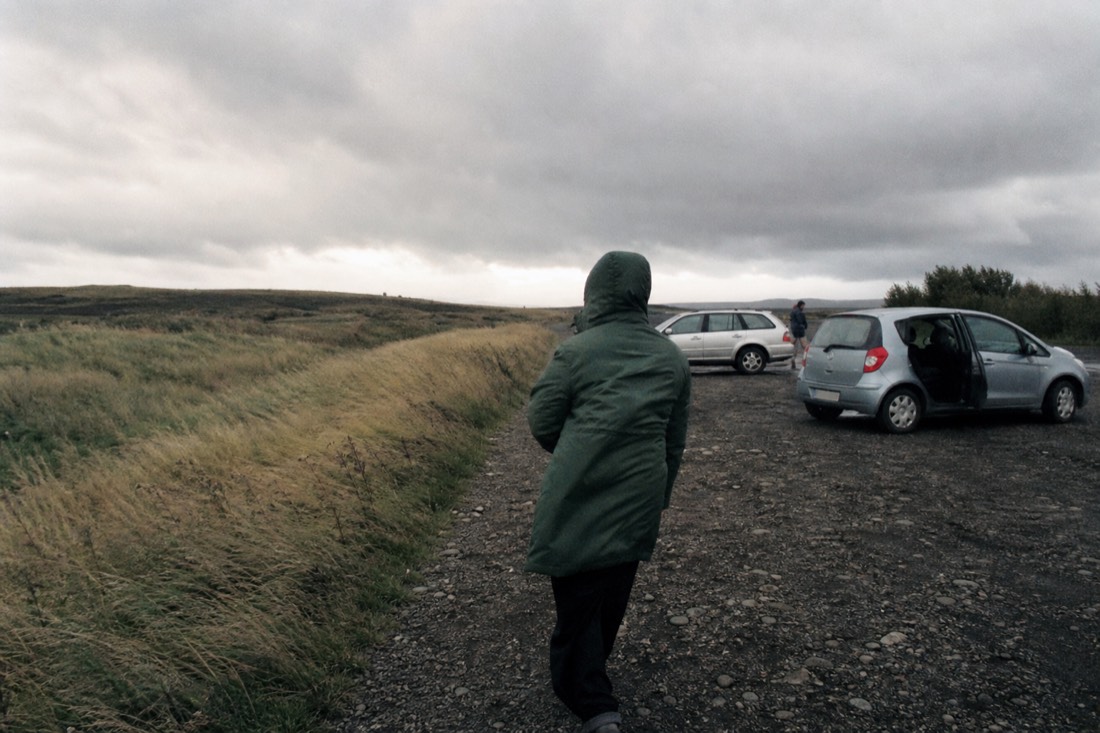
I have guided this road since 2022, and I do not lead any of the three bookable tours on this site, so take this as what I notice from a coach window and a car park, not a sales pitch. The mistakes are consistent enough that I could set my watch by them.
| The mistake | What it costs on the day | What I watch work instead |
|---|---|---|
| Carrying speed onto gravel edges | Stone chips to the windscreen, straight into the CDW excess | Ease off where the tarmac frays, especially along route 35 |
| Walking past the parking machine | A fine weeks later, since cameras read your plate | Pay at Hakið or online before you leave Þingvellir |
| Underestimating the wind on the door | A bent hinge or sprung door, an excess claim, not a scratch | Hold the door with both hands, park nose or tail into the gust |
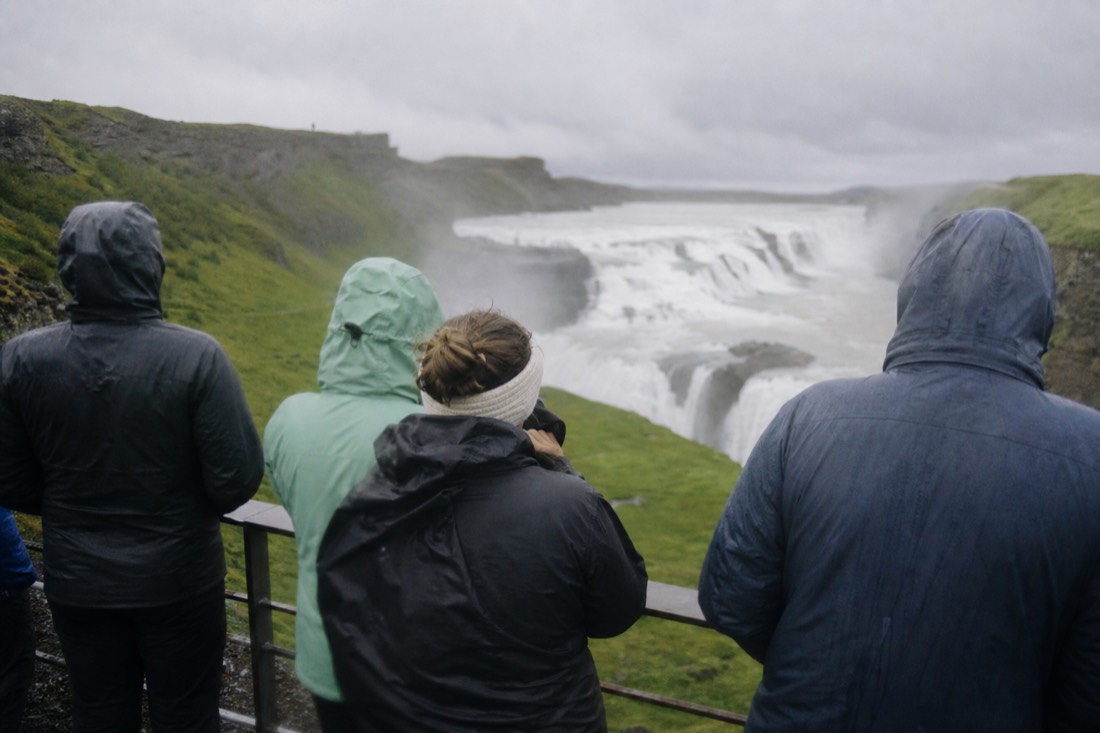
| Underdressing for the spray | A cold, rushed half-hour and a shortened Gullfoss | Waterproof shell and grippy boots; spray reaches the upper rail |
| Stacking too many stops into short daylight | Driving the final leg tired and in the dark | Three headline stops plus one extra in winter, no more |
Speed is the one I flinch at most. The main routes are paved, but the shoulders and several side turns off route 35 are loose gravel, and drivers keep their tarmac speed onto them. A stone flicks up, the windscreen cracks, and that is the 300,000 ISK excess doing exactly what it was written for. Slow down where the surface changes and most of that risk disappears.
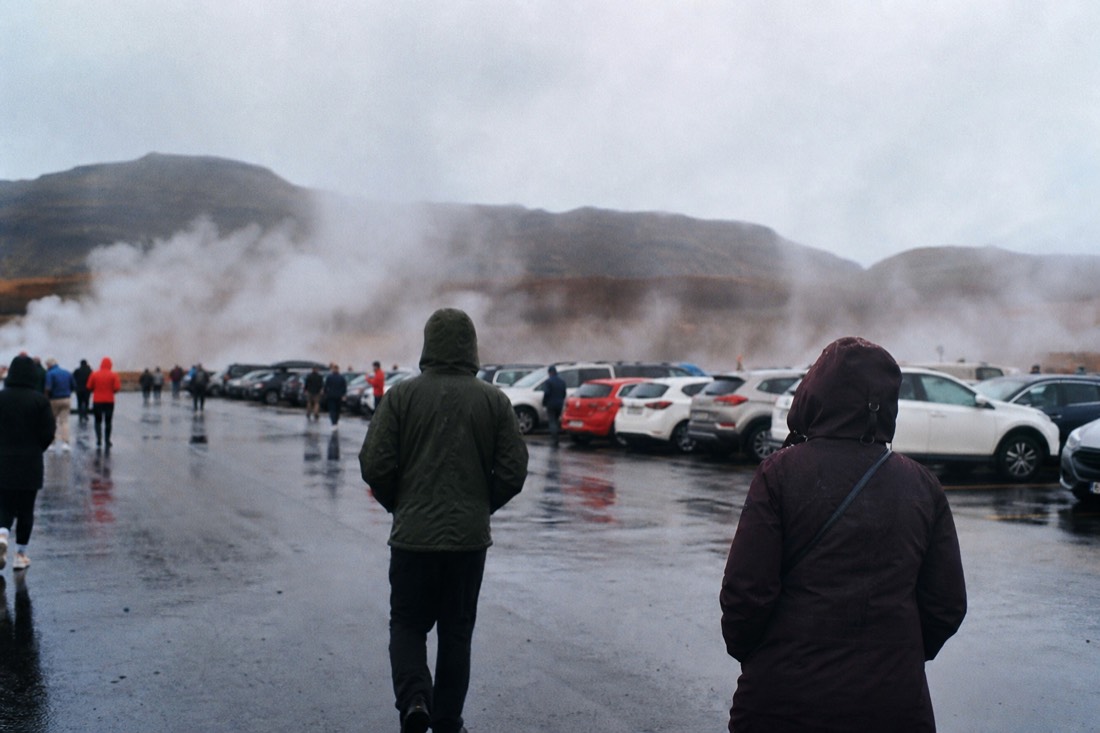
Parking catches the largest number of people, because it looks free and is not. Þingvellir and Geysir both read your plate by camera and bill 1,000 ISK per car, and the machine sits at Hakið or waits online, easy to stride past on the way to the gorge. You will not see a barrier. You will see a fine in the post. Pay before you walk in.
Then the wind. People who drive confidently at home still open a door as if the air were still, and here a gust can bend it back on its hinge in a second. That is a claim, not a scratch. I also watch self-drivers underdress for the spray at Gullfoss and try to cram eight stops into a December day that offers barely four and a half hours of light. Pick three headline stops and one extra, dress for water, and hold your doors. Do that and the route rewards you.
What else do people ask before deciding?
Do I need a 4x4 for this route? No. Routes 36, 365, 37 and 35 are all paved, and a small car handles them fine in summer. In winter, tyres and the day's conditions matter far more than drivetrain, so check road.is before committing either way.
How long should I budget either way? Driving nonstop takes 3.5 to 4 hours, but with honest stops a self-drive day ends up comparable to a tour. The guided loops run 6.5 to 11 hours door to door depending on what they include.
What happens if weather cancels a winter tour? The operator makes the call, and the small-group farm tour states plainly that operator weather cancellations are refunded. All three tours compared on this site cancel free up to 24 hours before departure anyway, so a grim forecast costs you nothing but a reshuffle.
Check your date before arranging the rest of your trip
General recommendation — confirm your party, pickup and requirements on the booking page.
Classic Golden Circle
The three main sights with an English-speaking guide and coach transport.
6½ hours · English · Meals extra. Select BSÍ or an offered pickup point; central hotels often use bus stops.
Scheduled dates from Viator. Availability and final price are confirmed on Viator.
Affiliate links: we may earn a commission at no extra cost to you. Product details checked 16 September 2026.