Golden Circle in Winter 2026-2027: What Actually Changes
Four hours of light sounds unworkable until you watch the whole route glow through what feels like a five-hour sunset. Here is how winter actually works out there.
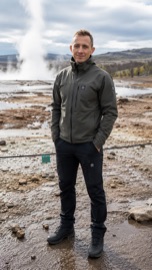 Written with Björn Einarsson, Iceland Golden Circle tour guide and local specialist
Short answer
Yes, the Golden Circle runs year-round. Roads 36, 365, 37 and 35 stay open through winter, and day tours drive them daily in vehicles built for ice. What changes is the clock. December gives you barely over four hours of light, so schedules compress and the driving is best left to a local.
The rope line at Gullfoss wears a coat of ice by mid-December, every fiber beaded and frozen, and the spray that built it drifts over the canyon like smoke that forgot to rise. I guide this route all winter. The light comes in low and stays low, the crowds thin to a fraction of July's, and the same loop turns into a different country. Nearly every message I get from November onward boils down to one worry: does this route actually work in winter? It does. Here is how, honestly, month by month and stop by stop.
Booking choice: A guided day handles the driving, not the weather. Start with the main trio; choose a lagoon combination only if you want the longer day. Explore Classic Golden Circle
Can you do the Golden Circle in winter?
Yes. The loop runs every day of the winter, and I guide it in every month of it. Roads 36, 365, 37 and 35 are paved, plowed and monitored, tours depart from Reykjavík all season, and the classic trio of Þingvellir, Geysir and Gullfoss stays fully open. You just plan around ice and a short day.
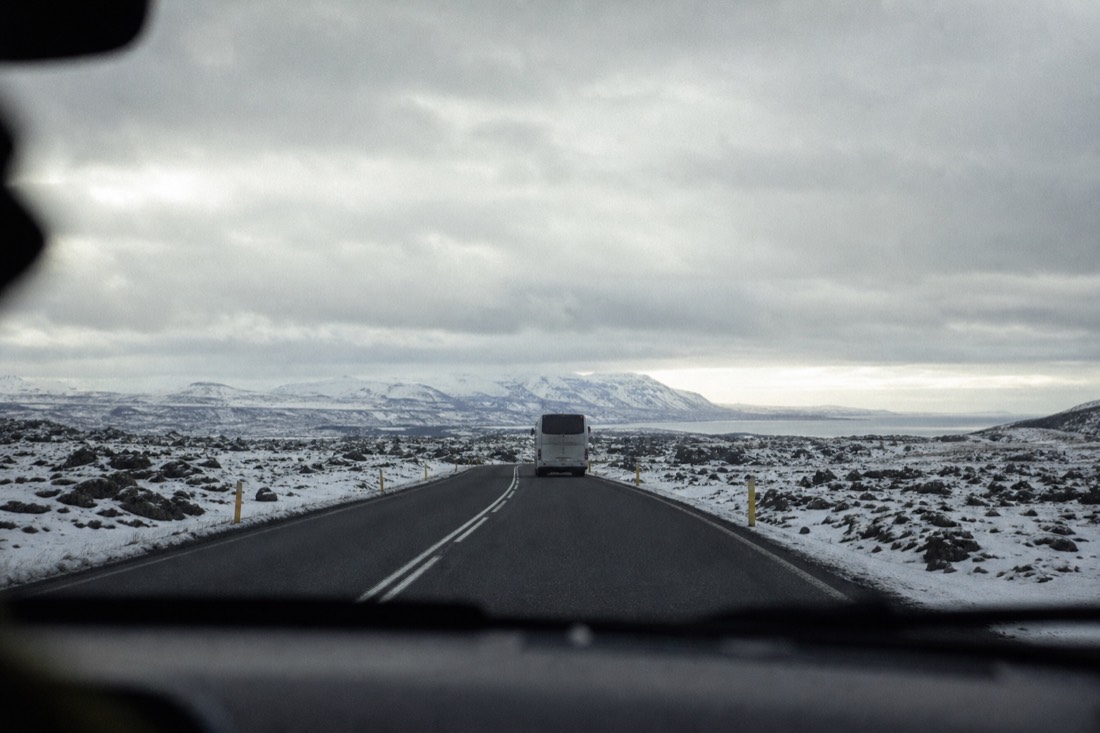
I drove my first winter season out here in 2022, and the thing that surprised me was how ordinary it all felt to everyone else. Plows were out before dawn. Tour buses left the city on schedule, pickup lights sweeping hotel fronts in the dark. The loop is roughly 300 km and takes 3.5 to 4 hours of pure driving in summer; in winter I budget more, because you drive to the surface, not to the sign. Day tours run 6.5 to 11 hours the whole year, and the operators build their winter timings around the light rather than trimming stops.
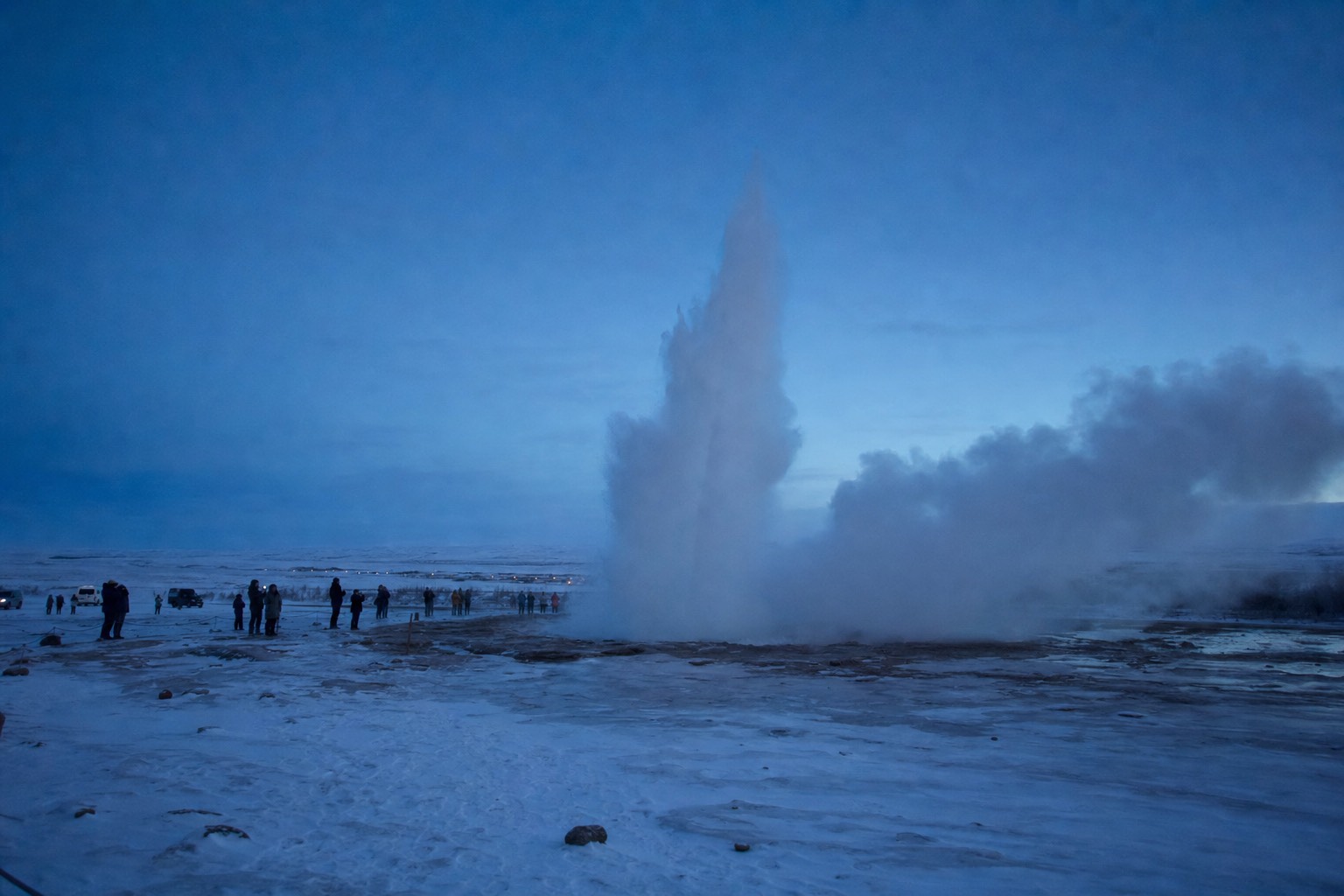
What you gain is space. In January I have stood at the rope at Strokkur with maybe twenty other people, steam rolling sideways over the snow, and heard the eruption instead of the crowd. The low sun never climbs far, so the light that photographers chase for one golden hour in summer lasts most of the usable day. Frost sits on the birch scrub at Þingvellir until noon. If you can tolerate cold fingers, winter is not the compromised version of this route. It is the atmospheric one.
What are the roads like from November to March?
Paved and plowed, but rarely dry. From November to March the surface cycles between wet, slush, packed snow and glare ice, sometimes all four in one afternoon. The road administration grades every section by color on a live map, and full closures on this loop are measured in hours during storms, not days.
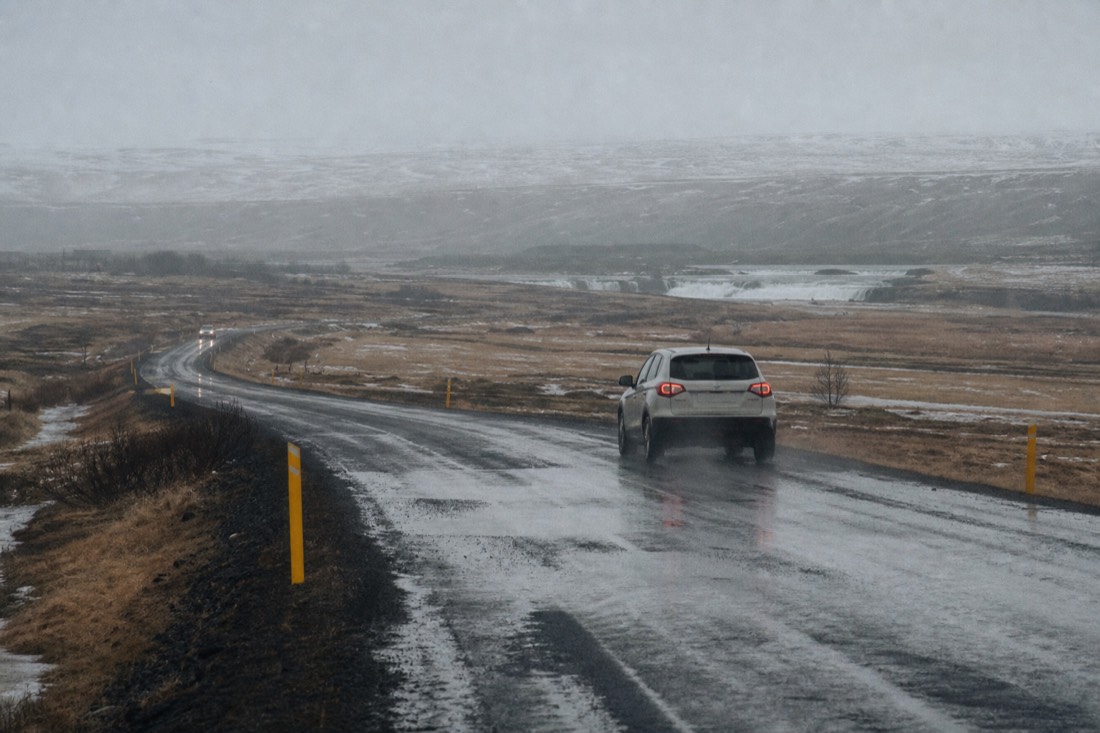
Every professional driver on this route starts the morning the same way: conditions on road.is, alerts on SafeTravel. The road administration's map colors each section from easily passable through slippery to impassable, updated through the day, and it is startlingly accurate. The loop itself is main-road priority for plowing. What catches people is not snow depth, it is glare ice under a dusting of powder, and wind. Gusts here will shove a rental sideways and have flipped car doors back on their hinges.
Locals manage fine. The honest question is whether you should, and I wrote a whole piece weighing whether to drive it yourself or ride with a guide. In winter the math tilts hard toward the bus:
| Winter factor | Self-drive | Day tour |
|---|---|---|
| Ice and storm driving | Yours, plus the rental excess | A local who drives it daily |
| Morning go/no-go call | You, reading road.is in Icelandic winter | Operator decides, refunds weather cancellations |
| Short daylight | You plan the light window yourself | Schedule already built around it |
| If plans collapse | Rebooking, towing risk | Free cancellation up to 24 hours on all three tours here |
| Cost | Rental, winter excess, fuel, parking fees | One ticket; live price on each listing |
If winter is when you are coming and you want the driving handled, book the Small-Group Blue Lagoon combo and check live availability and prices on Viator. It runs the full loop with a maximum of 19 people, then ends with two hours in geothermal water while the air outside sits below freezing. In February that ending is not a perk, it is the point.
How much daylight do you get, month by month?
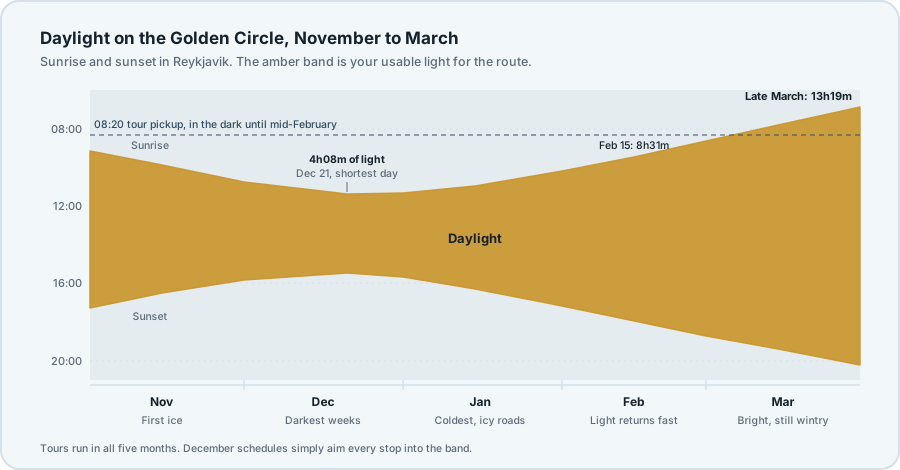
Between four and eight hours through the deep winter. Mid-December bottoms out at 4h08m of light on the solstice, January climbs back past five hours, February jumps beyond eight, and late March hands you more than thirteen. Tours run straight through the darkest weeks; they simply aim every stop into the light window.
Here are the real Reykjavík numbers, and the route runs on the same clock:
| Date | Sunrise | Sunset | Daylight |
|---|---|---|---|
| November 15 | 09:54 | 16:31 | 6h37m |
| December 21 (solstice) | 11:22 | 15:29 | 4h08m |
| January 15 | 10:57 | 16:16 | 5h19m |
| February 15 | 09:27 | 17:57 | 8h31m |
| March 15 | 07:50 | 19:25 | 11h35m |
A December day averages 4 hours 22 minutes of light. That sounds like a problem until you see how it behaves. The sun barely clears the horizon, so sunrise smears into a long amber morning, the middle of the day looks like late afternoon, and sunset takes its time too. Tours leave Reykjavík in the dark around 08:20, reach Þingvellir as the sky turns navy blue, and put you at Gullfoss and Geysir in the best light of the day. By the time darkness closes in, you are on the homeward leg or, on the combo route, floating in the lagoon.
What changes at each stop in winter?
Every stop stays open, but three things change: Gullfoss closes its lower path when ice makes it dangerous, Þingvellir's rift walk turns slick enough for shoe spikes, and the Geysir field gains drama because 80 to 100 degree water meets freezing air. Kerið wears snow on red slopes. The Blue Lagoon feels twice as good.

The one real winter loss on the whole route is at Gullfoss: the lower path down beside the falls closes when spray ice makes it lethal, which is most of the season, as the falls' own visitor information spells out. You still get the full 32-meter, two-step drop from the upper viewpoint, now framed by ice cliffs. I think it is the better angle anyway. Winter also opens a door the summer route lacks: the Langjökull glacier above Gullfoss holds a man-made ice tunnel you can walk into, a genuinely blue world you enter from the surface. It runs as its own trip, so if a glacier interior is on your list, check availability here. If you want the full anatomy of the route, my stop-by-stop map guide covers every pull-off; the winter deltas look like this:
| Stop | What winter does to it | Practical note |
|---|---|---|
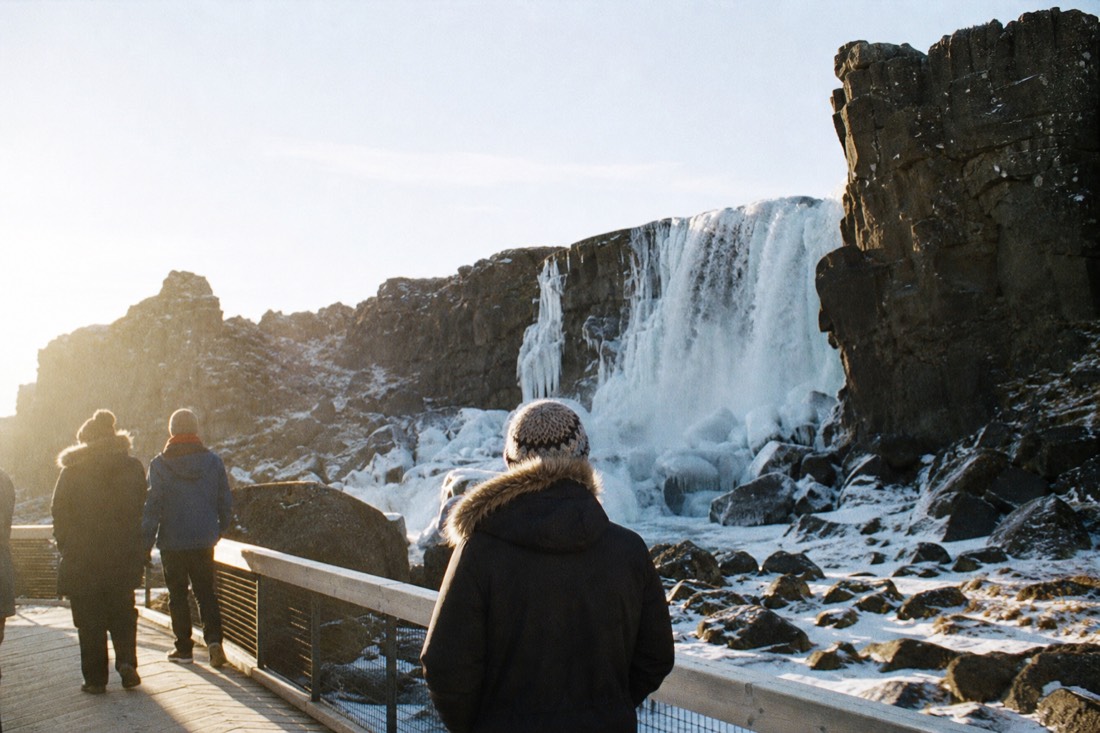
| Þingvellir | Rift path carries packed snow and ice; Öxarárfoss freezes into sculpture | Entry free, parking 1,000 ISK per car |
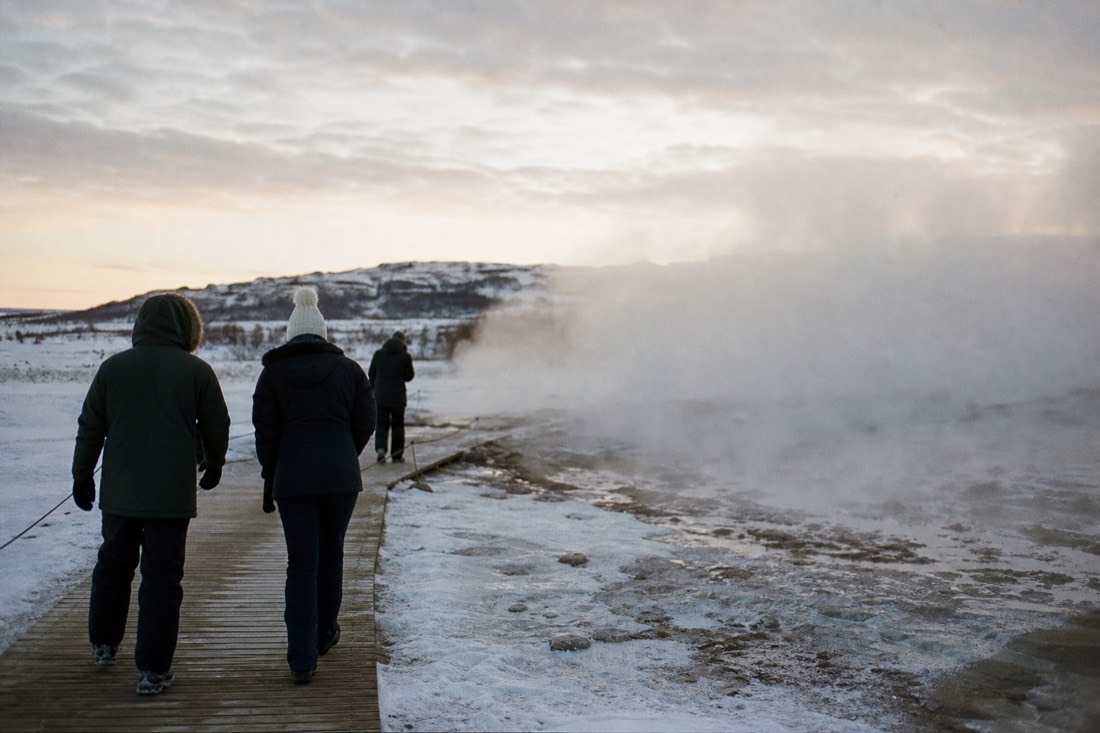
| Geysir | Strokkur still erupts every 5 to 10 minutes; steam triples in cold air | Free; stay on roped paths, runoff scalds |
| Gullfoss | Lower path closed for ice; falls part-freeze | Upper platform open, free |
| Kerið | Snow dusts the red scoria cone, crater lake freezes pale | 700 ISK entry, per kerid.is |
| Blue Lagoon | Steam so thick you lose the far edge of the water | Pre-booking required, from $95 at bluelagoon.com; included on the combo tour |
Timed stops shrink a little in the darkest weeks, but no operator skips the trio. Dress right and the cold reads as drama, not hardship.
Can you see the northern lights on a day tour?
Sometimes, and only by accident of timing. Day tours are not aurora hunts, but from late November to mid-January it is fully dark on the ride back to Reykjavík, so a clear night with solar activity can hand you lights through the bus window. Treat it as a bonus, never the plan.
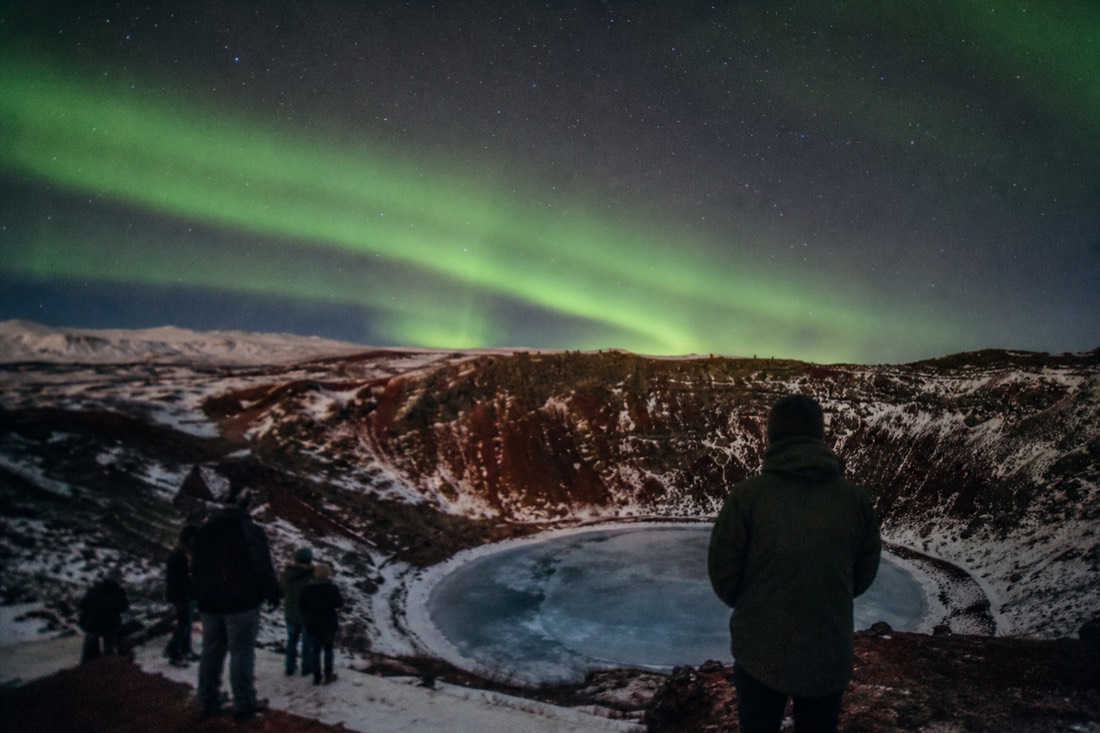
I will not sell you certainty here, because nobody honest can. The aurora needs three things at once: darkness, a clear sky, and solar activity, and you only control the first by coming in winter. On the 11-hour combo route the return leg lands well after nightfall from November through January, and I have watched a pale green band build over the road while a busload of people pressed against the left-side windows. I have also driven ten straight nights of cloud. Both are normal.
The tool that matters is the Icelandic Met Office aurora forecast, which shows cloud cover and an activity index for the night ahead. Check it after your tour books, not before; the forecast is only trustworthy a day or two out. If lights are your priority, do the day loop for the landscape, then book a dedicated evening hunt on a night the cloud map looks open. Stacking both into one winter day is genuinely doable, since day tours return by early evening in every month except the depths of December, and even the 11-hour combo has you back around 19:30 to 20:00 from its 08:20 start.
What should you wear and pack?
Layers that handle minus five to plus two, wind that doubles the cold, and ground ice. Waterproof shell over wool, insulated waterproof boots, hat, gloves, and rubber ice grips for your soles. Tours keep a warm bus thirty steps away at every stop, which forgives most packing mistakes except bad footwear.
The cold itself is milder than people fear. What gets visitors is wind and ice. A calm -2°C at Þingvellir feels pleasant; the same temperature with a 15-minute gale across the rift feels vicious. And the single most common winter injury I see is a slip on polished ice in smooth-soled sneakers, usually within sight of the parking lot.
| Layer | What works | Why |
|---|---|---|
| Base | Wool or synthetic, never cotton | Stays warm when damp |
| Mid | Fleece or light down | Traps heat between bus and viewpoint |
| Shell | Waterproof and windproof, with a hood | Sideways sleet is a normal Tuesday |
| Feet | Insulated waterproof boots plus strap-on ice grips | Glare ice at every viewpoint |
| Extras | Hat, gloves, swimsuit, sunglasses | The swimsuit is for the lagoon; the low sun sits in your eyes |
Ice grips cost little at any Reykjavík supermarket and change your whole day. Bring the swimsuit in your daypack even if you booked the plain loop; plans change. For the small stuff nobody warns you about, from pickup timing to where the bathrooms hide, I put the rest in what I wish people knew before their first trip.
What does each winter month feel like on the route?
Each winter month trades one thing for another. November and March give the most light but softer scenery. December and January hand you deep blue dusk, the thinnest crowds, and the best odds of lights on the drive home. February splits the difference: fast-returning daylight over firm snow. Nothing on the trio closes.
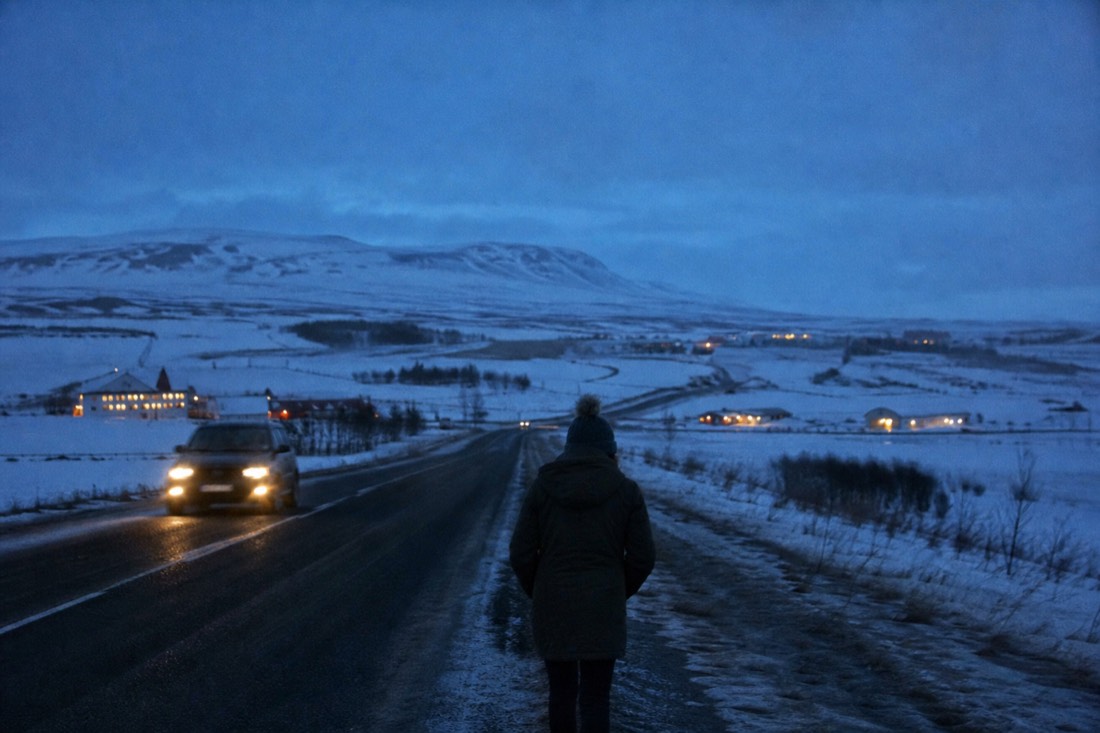
Winter here is not one season, it is five moods stacked back to back. I have driven the loop in the black quiet of late December and again in a bright, blustery March, and they barely feel like the same road.
| Month | Typical daylight | Road and storm risk | Crowds | Aurora odds on the drive home | What stands out |
|---|---|---|---|---|---|
| November | ~6 to 7 h, fading fast | Rising, first real storms | Shoulder, thinning | Fair once the return runs dark | First snow on the rift |
| December | ~4 to 4.5 h, the floor | Highest, storm season peak | Thinnest of the year | Best, full dark by mid-afternoon | Blue dusk all day, lit farms |
| January | ~5+ h, climbing | High, still stormy | Very low | Best, dark return leg | Heaviest ice on Gullfoss |
| February | ~8.5 h, jumping | Easing but variable | Building again | Fading window, still possible | Firm snow, longer usable day |
| March | 11 to 13 h by late month | Lowest of the five | Busiest winter month | Only early or late in full dark | Winter scenery with real daylight |
November eases you in. There is still six or seven hours of light, the snow is thin and comes and goes, and the crowds have already dropped off from the autumn rush. The first proper storms arrive, so you start watching the forecast, but most days run normally.
December is the extreme and, honestly, my favorite to guide. The sun barely clears the ridgeline, and the whole day reads like a slow blue dusk. You get the fewest people of the year at every stop, farm lights glow across the fields by mid-afternoon, and because it is fully dark on the ride home, a clear night can hand you the aurora through the window. The trade is storm risk: December sits at the heart of the season, so a rearranged day is a real possibility.
January keeps the short light but the ice deepens. Gullfoss wears its heaviest coat, the cold turns sharp and dry, and the route stays gloriously empty. February is where the day reopens. Daylight jumps past eight hours, the snow firms into proper winter scenery rather than slush, and you feel the route waking up as visitor numbers start to climb again.
March is the soft landing. By late month you have eleven to thirteen hours of usable light, so a whole extra layer of the loop comes back into play, but you trade some of the deep-winter drama and share the stops with more people. If short days frighten you, this is the month to pick. If the blue-dusk stillness is the reason you came, aim earlier and accept the clock.
What safety kit and checks matter for a winter visit?
Three websites and four objects. Read road.is for the surface, vedur.is for wind and the aurora index, and safetravel.is for alerts, all on your travel morning. Carry strap-on ice grips, wear insulated waterproof boots, pack a windproof hooded shell, and keep your phone charged. On a booked tour the driver runs the checks; the kit is still yours.
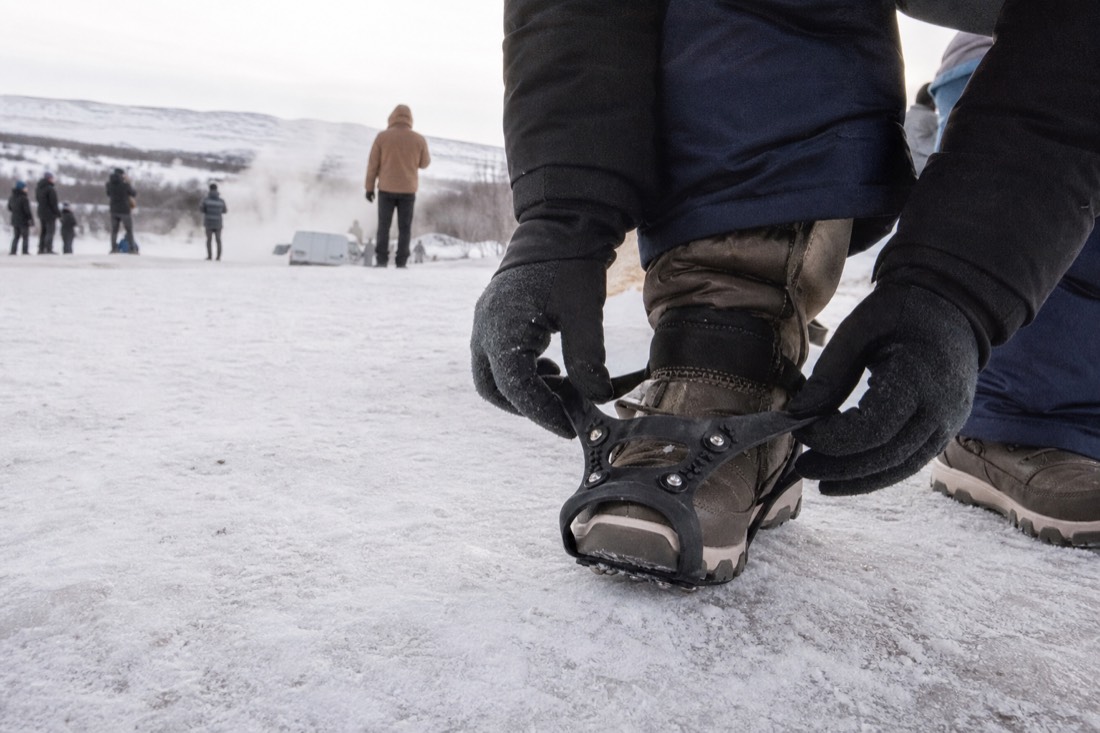
None of this is about fear. It is about turning a wildcard into a routine, the same routine every driver out here runs before the wheels move.
| Check or item | Where or how | What it tells you or guards against | When |
|---|---|---|---|
| Road surface | road.is color map | Passable through impassable, section by section | Travel morning |
| Wind and storms | vedur.is | Gust strength and storm warnings | Night before and morning |
| Aurora chance | vedur.is aurora page | Cloud cover plus an activity index | A day or two out |
| Route alerts | safetravel.is | Closures, incidents, travel advisories | Travel morning |
| Ice grips | Strap over your soles | Slips on glare ice at viewpoints | Before you leave |
| Boots | Insulated and waterproof | Wet snow and slush soaking through | Before you leave |
| Phone and map | Charged, offline map saved | Reception gaps between stops | Before you leave |
Start with the three sites. road.is colors every section of the loop from easily passable through slippery to impassable, and it updates through the day, so it tells you what the tarmac is actually doing right now. vedur.is, the Icelandic Met Office, is where you read wind, which matters more than temperature in this country, and it also carries the aurora forecast with cloud cover and an activity index for the night ahead. safetravel.is is the alert layer: closures, incidents, and travel advisories worth knowing before you set off. Check all three on the morning you travel, not the week before, because winter weather here turns on a day or two of notice.
Then the kit. The single item that changes people's day is strap-on ice grips. They cost a few hundred ISK at any Reykjavík supermarket, they slip over whatever boots you already own, and they turn a treacherous car park into a normal walk. Wear insulated, waterproof boots under them, because cold feet end a good day faster than anything. Pack a windproof shell with a hood, keep your phone charged with an offline map saved, and you have covered the parts winter tends to test.
Here is the honest shortcut: if you book a tour, the driver runs the road, weather and alert checks for you and makes the go or no-go call. That is most of the value of a guided winter day. What no operator can pack for you is your own footing and warmth, so the kit column stays your job whether you drive or ride.
The winter mistakes Björn sees most on the route
Björn Einarsson has guided the Golden Circle since 2022 and hosted more than a thousand travelers on it. The same winter mistakes repeat: smooth-soled shoes on glare ice, booking the tour for the last day with no storm buffer, leaving the swimsuit in the hotel, and treating a day tour as a guaranteed aurora hunt. Each one is easy to avoid.
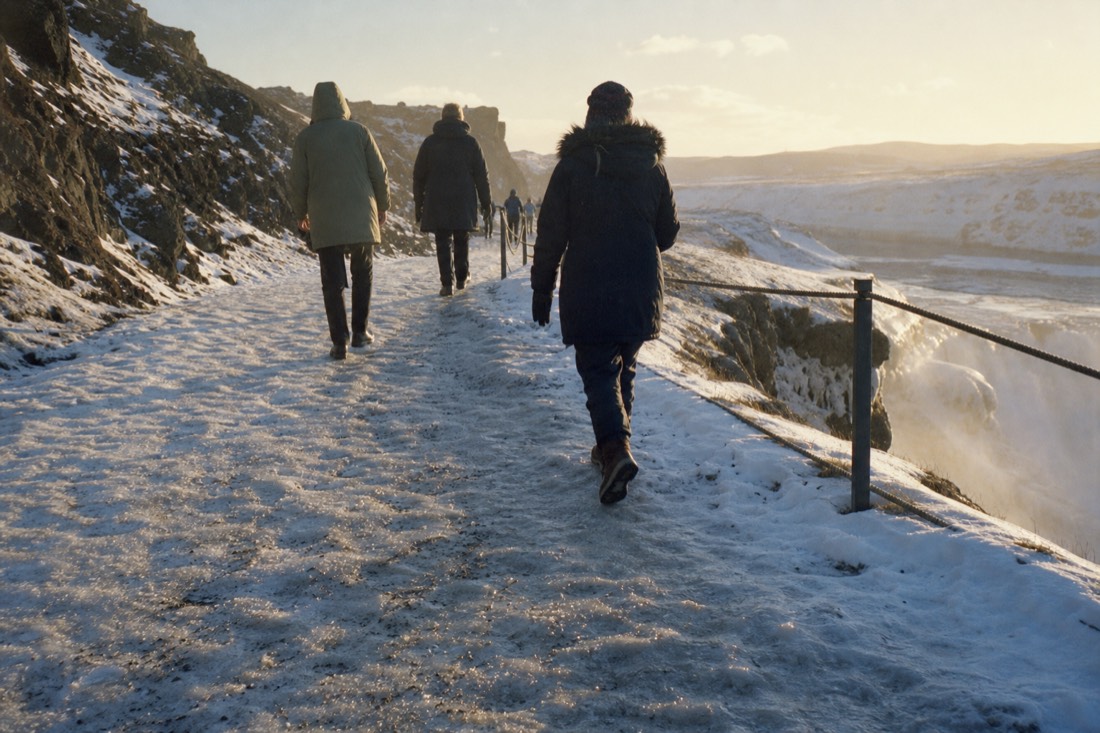
I do not lead the three tours this site books, but I am on the route constantly, and winter mistakes cluster into a short, predictable list.
| Mistake | What I see on the route | What to do instead |
|---|---|---|
| Smooth-soled sneakers | Slips on polished ice within sight of the car park, the most common winter injury | Strap-on ice grips, a few hundred ISK at any supermarket |
| Booking for the last day | A storm cancels it with no room left to rebook | Book early in the trip, cancel free up to 24 hours |
| Swimsuit left behind | Missed soaks when the plan drifts toward warm water | Pack it even on the plain loop |
| Expecting guaranteed aurora | Disappointment on a cloudy return leg | Treat lights as a bonus, book a dedicated night hunt |
| Underdressing for wind | A calm forecast trusted, then a gale across the rift | Windproof hooded shell over wool, every time |
| Tight evening plans | A late combo returns 19:30 to 20:00, dinner missed | Leave the evening open after an 11-hour tour |
Footwear is number one and it is not close. The most common winter injury I see is a slip on polished ice in smooth-soled sneakers, usually within sight of the car park, often by someone who packed beautifully for cold but forgot the ground. Strap-on grips end that problem for the price of a coffee.
The second is timing the booking. People slot the loop into the last day of the trip, a storm rolls in, the tour cancels, and now there is no room to rebook. Free cancellation up to twenty-four hours before is on all three tours featured here, so use it: book early in your stay and keep the flexibility working for you.
Then the small stuff that stings. Swimsuits left at the hotel, because someone assumed the plain loop meant no water, then the day drifts toward the Blue Lagoon or the Secret Lagoon, entry around 4,500 ISK, and they are watching from the edge. Pack it every time. Aurora expectations run too hot too: a day tour is not an aurora hunt, and treating a cloudy return leg as a broken promise ruins an otherwise good day. Come for the landscape, take the lights as a gift.
The last one is pacing. The eleven-hour combo returns to Reykjavík around 19:30 to 20:00, and I watch people miss dinner reservations they booked for 19:00 on the same night. Leave the evening loose. And read the wind, not just the temperature: a calm minus two is pleasant, the same minus two with a gale across the Þingvellir rift is a different animal, and only one of those two forecasts tells you which you are getting.
What else do people ask about winter?
Is there a worst month to visit? By the numbers, December. It has the least light, 4h08m at the solstice, and sits in the heart of storm season, so it carries the highest odds of a rearranged day. It is also the most atmospheric month out here, all blue dusk and lit-up farms. If short days worry you, aim for late February or March: real winter scenery with 8 to 12 hours of light.
Do winter tours actually get canceled? On genuine storm days, yes, and you want them to be. All three tours featured on this site cancel free up to 24 hours before departure, and operator weather cancellations are refunded. The practical move in winter is booking early in your trip, so a storm day still leaves you room to rebook.
Which tour makes the most sense in winter? For most people, the 11-hour Blue Lagoon combo (4.9 from 6,241 reviews): the warm ending is worth the most exactly when the air hurts. If you want minimum cold exposure, the 6.5-hour Classic (4.5 from 5,543 reviews) keeps it short. The 9-hour Friðheimar route (4.9 from 215 reviews) trades the lagoon for hot tomato soup inside a glowing greenhouse, which in January is its own kind of genius.
Check your date before arranging the rest of your trip
General recommendation — confirm your party, pickup and requirements on the booking page.
Classic Golden Circle
The three main sights with an English-speaking guide and coach transport.
6½ hours · English · Meals extra. Select BSÍ or an offered pickup point; central hotels often use bus stops.
Scheduled dates from Viator. Availability and final price are confirmed on Viator.
Affiliate links: we may earn a commission at no extra cost to you. Product details checked 16 September 2026.