The Prettiest Waterfalls on the Golden Circle Route
Gullfoss, Öxarárfoss, Brúarfoss and Faxi compared by an Icelandic guide, with heights, the walk each fall takes, which tours stop where, and the best light.
 By Björn Einarsson, Iceland Golden Circle tour guide and local specialist
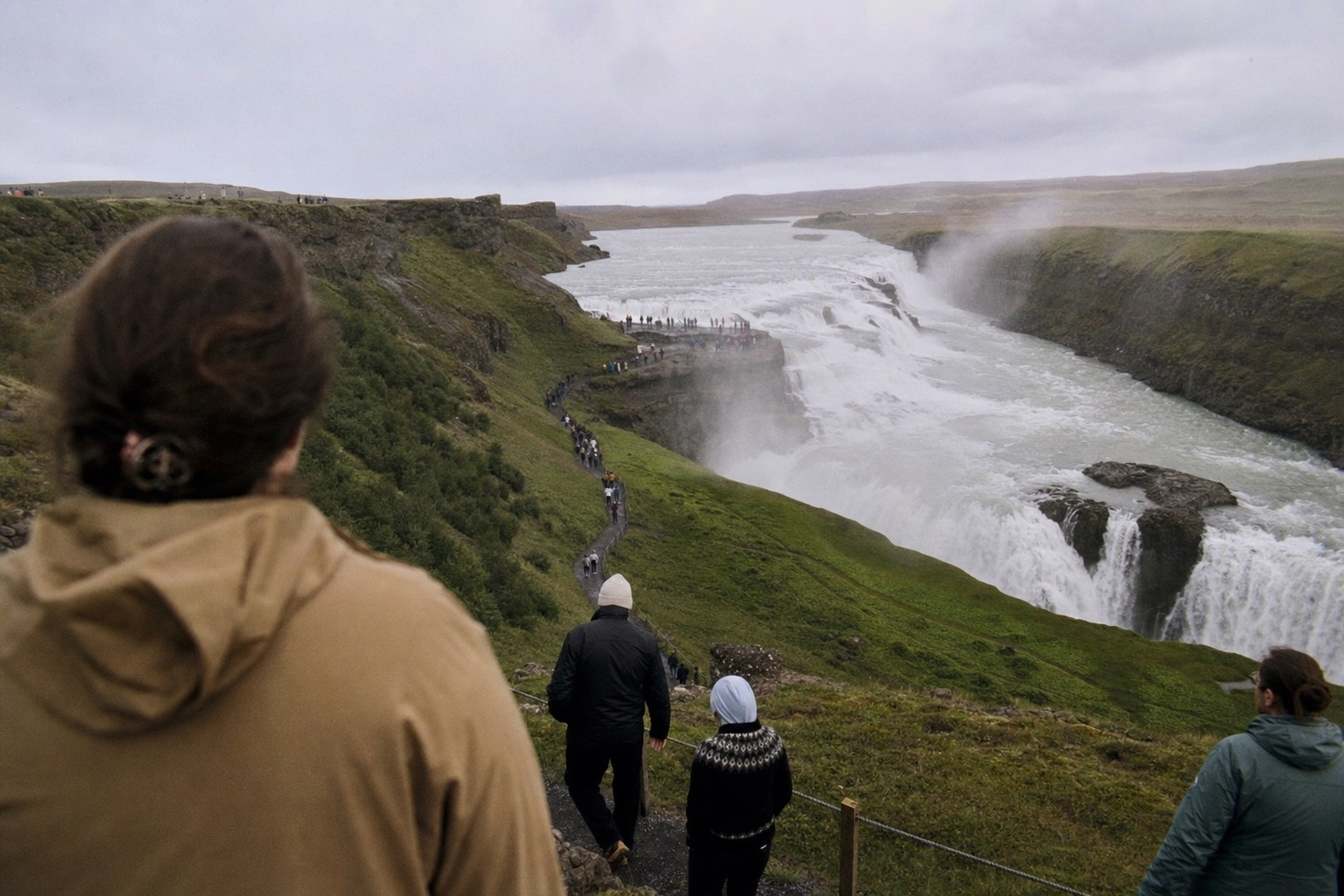
The spray at Gullfoss does not wait for you to reach the viewpoint. On a windy day it climbs out of the canyon, drifts across the path, and beads on your jacket while you are still reading the sign by the car park. I have watched hundreds of travelers walk into that cloud mid-sentence and simply stop talking. Waterfall questions are the ones I hear most on the route, and the honest answers are stranger than the postcards suggest. The famous fall is not the only one worth your time. The prettiest one might be three meters tall. And the best photo of the day often happens after the buses leave.
Booking choice: For Brúarfoss and Gullfoss together, start with the 8-hour minibus day. Choose the farm itinerary for an optional Öxarárfoss stop. Explore Brúarfoss + Golden Circle minibus
Which waterfall on the route is the prettiest?
Gullfoss is the prettiest waterfall that every tour actually visits: a 32 meter double cascade turning sideways into a canyon. For pure color, tiny Brúarfoss beats it, with either a short walk from paid parking or a longer riverside hike. Öxarárfoss wins on setting, Faxi wins on calm. Decide what pretty means to you first.
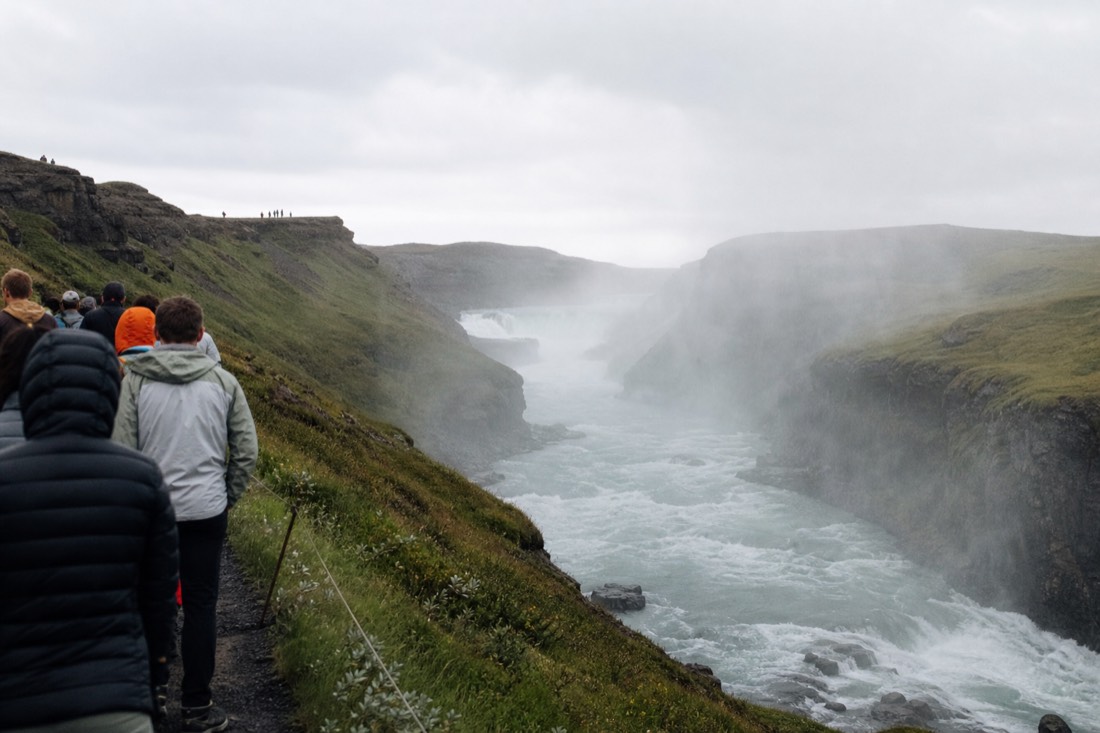
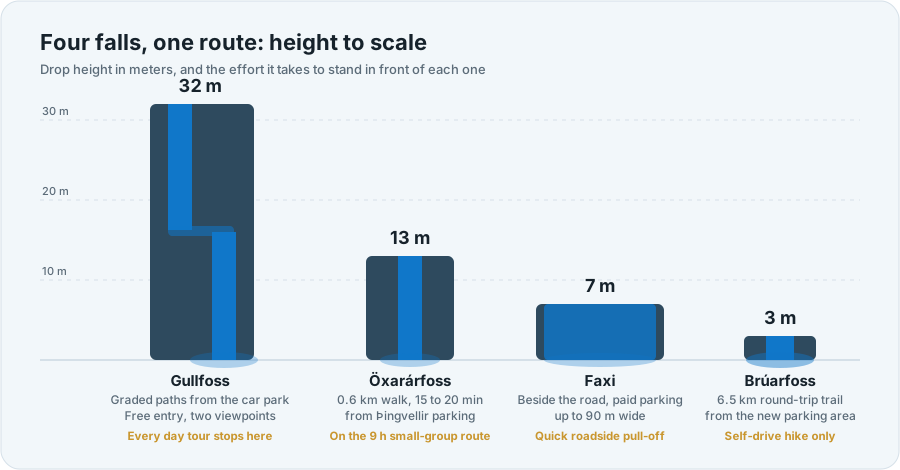
Pretty splits four ways out here, and I mean that practically. Power belongs to Gullfoss, where the Hvítá throws itself down two tiers and vanishes into a gorge you cannot see the bottom of from the main viewpoint. Color belongs to Brúarfoss, a small fall on the Brúará that runs an unreal milky blue. Setting belongs to Öxarárfoss, a white ribbon pouring over the dark wall of the Almannagjá rift at Þingvellir, inside the valley where Iceland founded its parliament in 930. Calm belongs to Faxi, a wide, low curtain that most people photograph through a bus window without ever learning its name.
Here is the honest lineup, with the effort each one asks of you:
| Waterfall | Drop | Getting there | Who stops |
|---|---|---|---|
| Gullfoss | 32 m in two tiers | Graded paths from the car park, free entry | Every day tour |
| Öxarárfoss | 13 m | 0.6 km walk, 15 to 20 minutes | The 9 h small-group tour |
| Faxi | 7 m tall, up to 90 m wide | Beside the road, paid parking | Occasional quick stop |
| Brúarfoss | About 3 m | Short walk from paid parking, or longer trail | Self-drive or a Brúarfoss-inclusive tour |
If you only get one, Gullfoss earns it, and every itinerary agrees with me. The access routes differ, so choose by the time and kind of walk you want rather than waterfall height. Where each of these sits on the loop is easier to picture on our stop list and map, which shows the classic trio plus the detours in driving order.
What makes Gullfoss the famous one?
Gullfoss earned its fame with scale and geometry: 32 meters of drop split across two tiers that twist roughly 90 degrees into the Hvítá canyon. In summer around 140 cubic meters of glacial water pour over every second. Entry is free, the paths are graded, and no fence tames the spray.
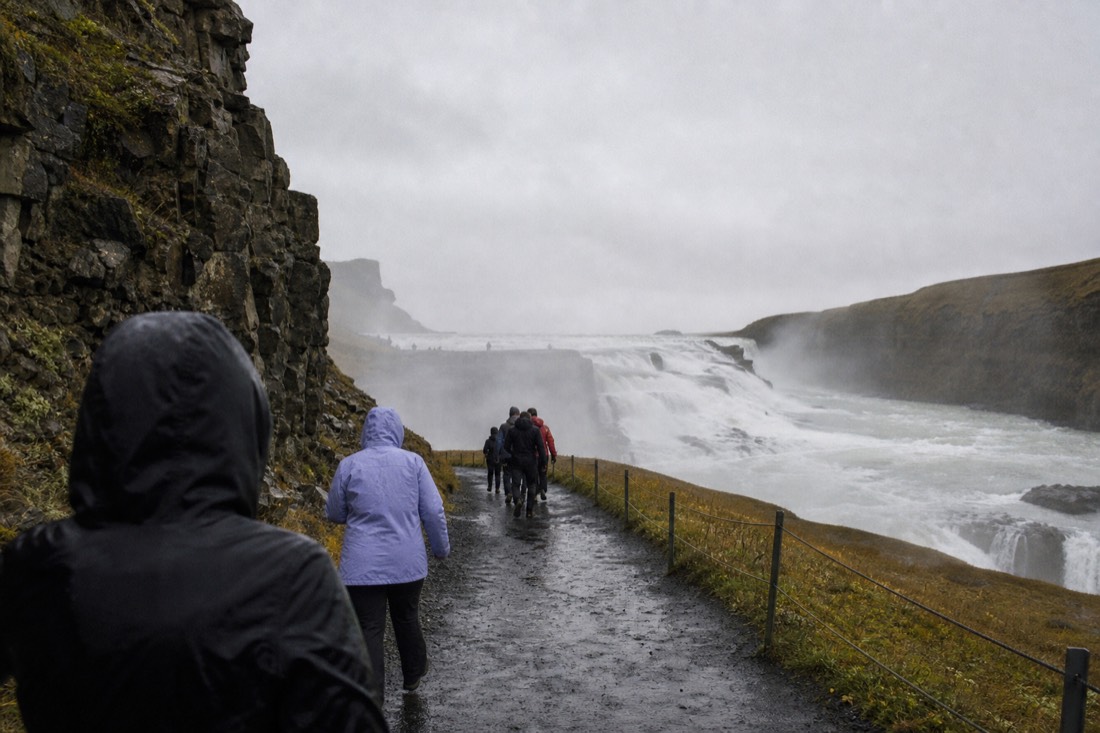
Most big waterfalls fall away from you. Gullfoss falls across you. The river drops one step, pivots, drops again, and disappears into a crevice running at an angle to everything you expect, so from the upper viewpoint the water seems to sink straight into the earth. That trick of geometry is what people remember, more than the height.
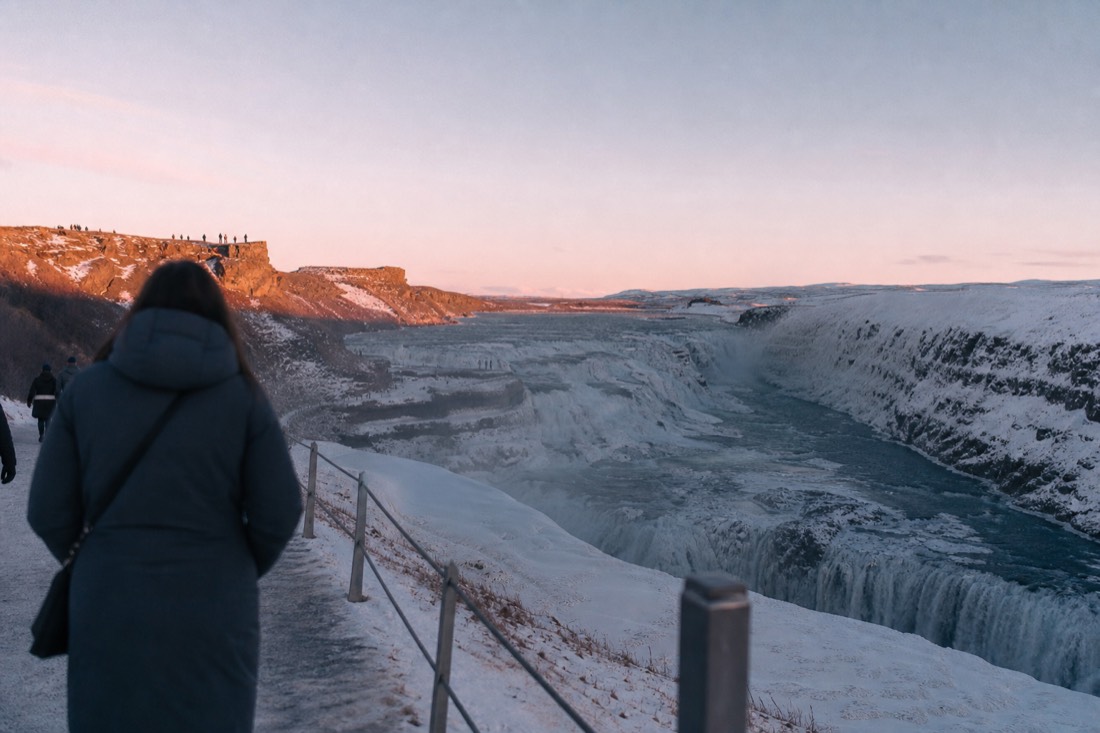
The numbers behind the drama shift with the calendar. Summer meltwater off Langjökull pushes the average flow to about 140 cubic meters per second. Winter cuts that to roughly 109, but trades volume for ice: the canyon walls grow frozen curtains and the spray builds glassy sheets on the railings. The official site notes that the lower path closes when winter ice makes it unsafe, so cold-season visitors watch from the upper viewpoint instead. If you are coming between November and March, our guide to the route in winter covers what that changes.
| Season | Average flow | Lower path | What it feels like |
|---|---|---|---|
| Summer | ~140 m³/s | Open, and you will get misted | Green banks, long evenings, rainbows in the spray |
| Winter | ~109 m³/s | Closed once ice builds | Frozen canyon walls, short pastel days |
Every tour stops here, usually for 40 to 45 minutes. That is enough for both viewpoints and a coffee, not enough for the crowd to thin. The falls themselves cost nothing, which still surprises people at something this famous.
Is Öxarárfoss worth the walk at Þingvellir?
Yes, when your tour gives it time. Öxarárfoss drops 13 meters over the black wall of the Almannagjá rift, and the walk is only 0.6 km, about 15 to 20 minutes on boardwalk and gravel. Most day tours skip it entirely, so check the itinerary before you assume you will see it.
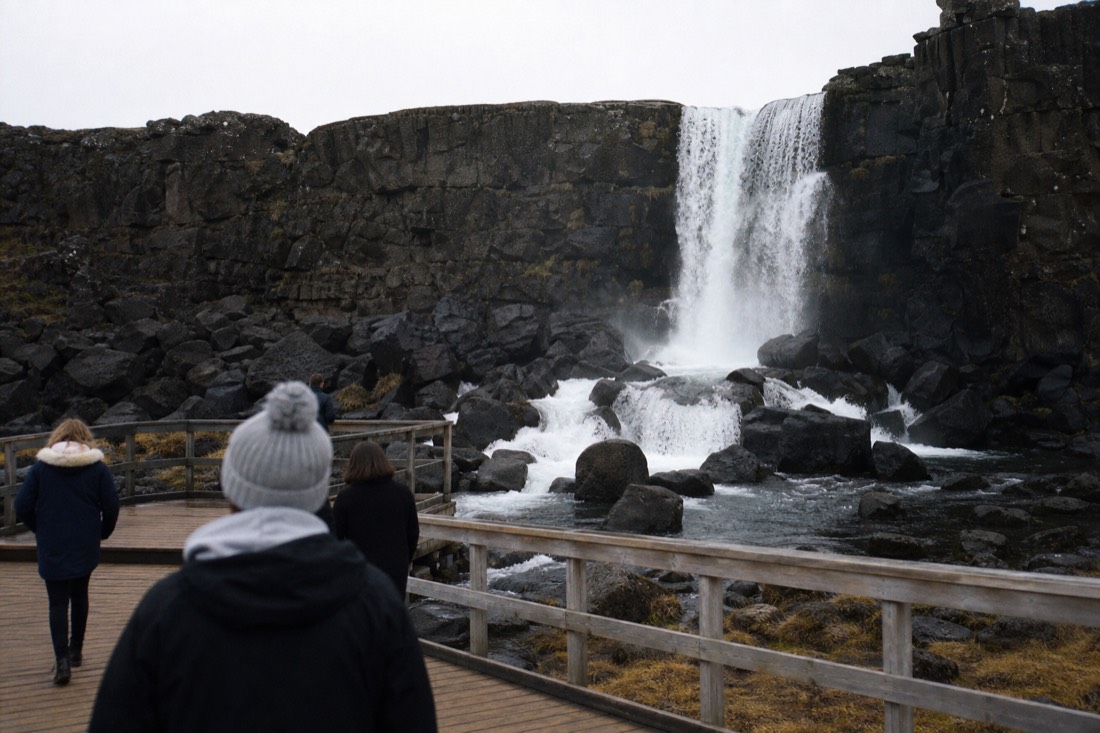
What sells Öxarárfoss is not the water, it is the wall. The Öxará river slides off the edge of the North American plate and lands in a pool of rounded basalt boulders, inside a gorge that is literally the gap between continents. Stand at the fall and the cliff behind it is the same rift you walk through on the main Þingvellir path, a strange thing to do with your own legs, which is why I wrote separately about walking between two tectonic plates. In winter the fall half-freezes into blue-white organ pipes, and the boardwalk gets slick enough that I keep spikes in my pocket.
The practical side: Þingvellir itself charges no entry fee, but parking is 1,000 ISK per car, paid at the machine or online. From the P2 area the trail to the fall is flat, short, and fine in normal shoes on a dry day.
Here is the catch travelers miss. A short Þingvellir stop can disappear into the rift walk and viewpoints before you reach Öxarárfoss. The farm-and-waterfalls itinerary lists the extra walk as optional, so confirm it with the operator when choosing your departure. A stop at the national park alone does not promise the waterfall.
Is Brúarfoss really that blue and can you reach it?
Brúarfoss really is that blue, a milky glacier blue that photos barely need to exaggerate. It is also small, about 3 meters tall. The newer paid parking area puts it within a short walk, while the longer riverside trail remains an option. Some minibus itineraries now include it.
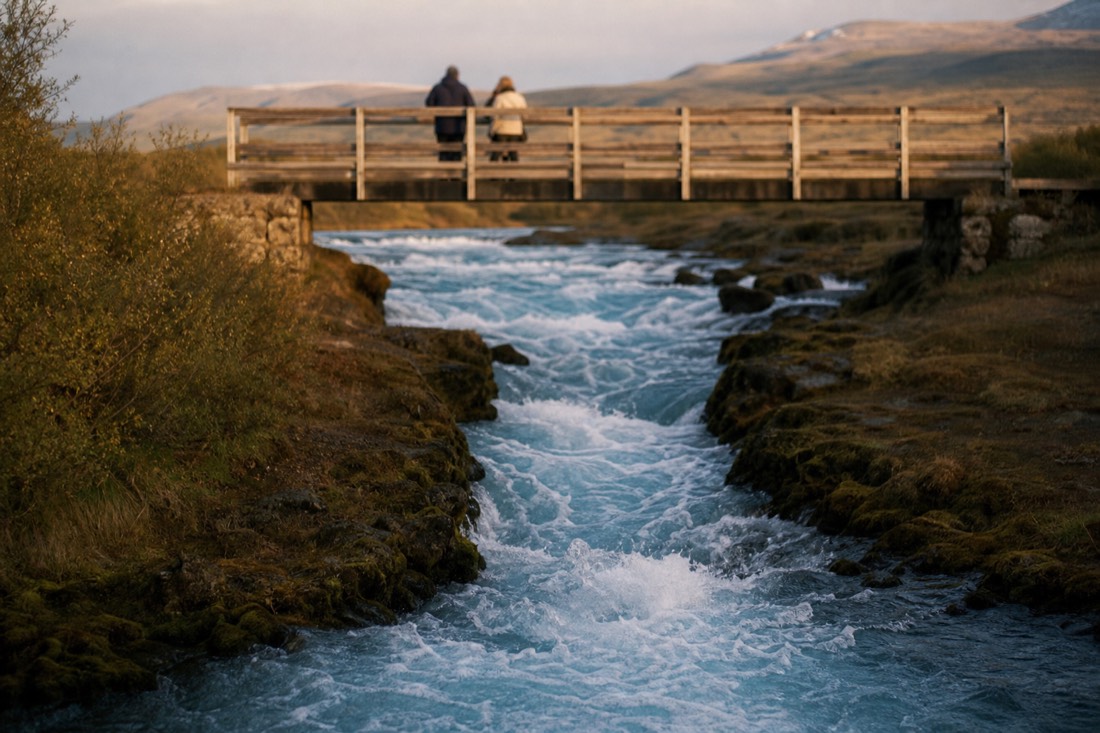
The color is real and it is the whole show. The Brúará carries glacial water that scatters light toward blue, and at the falls the river folds into a narrow central slot underneath a footbridge, so you look straight down into a churn the shade of toothpaste and sky. First-timers usually laugh when they see it. The fall itself is barely taller than a person; nobody hikes out for the height.
There are two different approaches. The newer paid parking area is close to the falls. The longer riverside trail from the Brúará bridge is a separate choice, roughly 6.5 km out and back, with Hlauptungufoss and Miðfoss on the way. Allow about two hours for that longer walk, with extra time for photos, and expect mud after rain.
Should you go? If you are driving yourself and the day has slack, yes, it is the prettiest single color on the route. If you are taking a tour, choose one that explicitly names Brúarfoss; the verified 8-hour minibus itinerary includes it. One more honest note, because the internet oversells this place: after heavy rain the pool can run ordinary grey with storm water, so treat the blue as a fair-weather bonus rather than a promise.
Which quieter falls do tours drive past: Faxi and friends?
Faxi, also called Vatnsleysufoss, is the one most buses pass within sight of: about 7 meters tall and up to 90 meters wide on the Tungufljót river, with paid parking beside the road. It draws a fraction of the Gullfoss crowd, which is exactly why photographers and picnicking locals rate it.
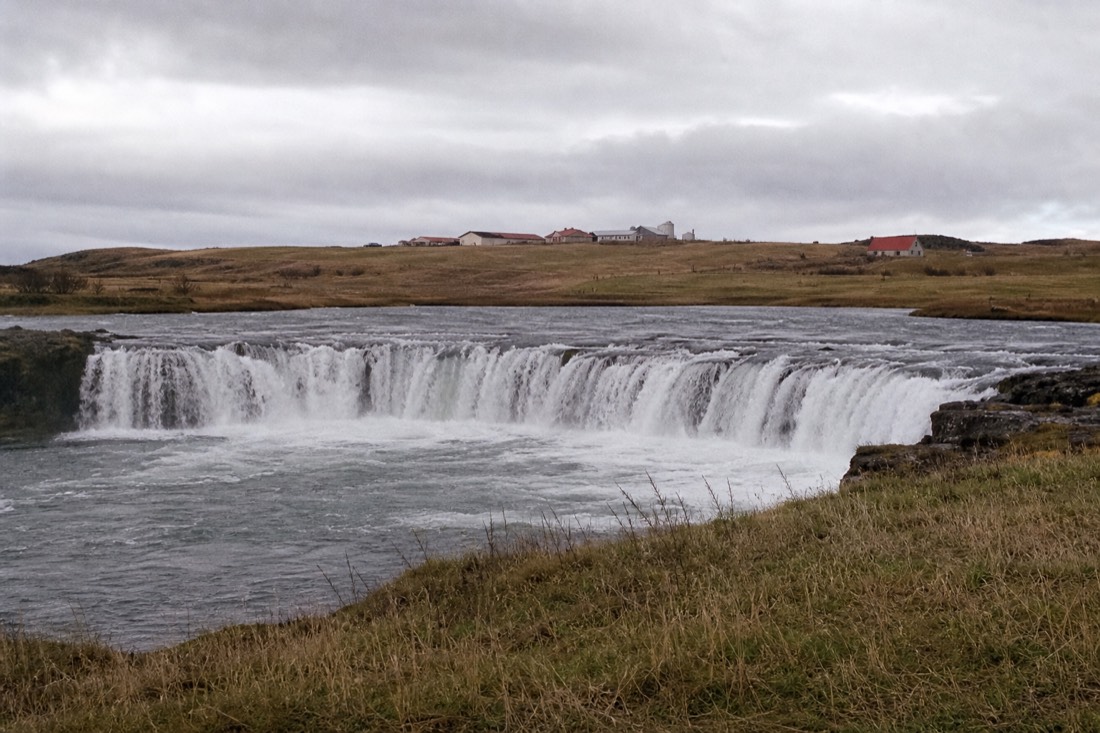
Faxi sits a few minutes off the main leg between Geysir and Skálholt, close enough that sharp-eyed passengers spot the white line of it from the road. It is the opposite argument to Gullfoss: no canyon, no roar you feel in your chest, just a broad, even curtain sliding over a low step with farmland rolled out behind it. There is a salmon ladder cut into one bank, a small parking area with a fee machine, and on most summer days, more birds than people. When a guest tells me Gullfoss felt like an airport, Faxi is where I point them next time.
The "and friends" part needs honesty. The Golden Circle proper is not stacked with hidden waterfalls; beyond the four in this article you are mostly looking at streams and the hot runoff channels at Geysir. If it is dramatic waterfalls you are chasing, Iceland's south coast has the two everyone photographs, Seljalandsfoss that you walk behind and Skógafoss that drops 60 meters in a single sheet, on a separate day tour from Reykjavík; check the tour and its dates here. The real question for the loop itself is which falls your bus gives actual time to, and here is how the three tours split their minutes:
| Tour | Gullfoss | Öxarárfoss | Other timed stops |
|---|---|---|---|
| Classic day tour, ~6.5 h | 40 min | Not included | Geysir ~1 h, Þingvellir 30 min |
| Blue Lagoon combo, ~11 h | 40 min | Not included | Geysir 1 h 20, Kerið 30 min, Blue Lagoon 2 h |
| Tomato farm and Kerið, 9 h | 45 min | Optional 15 min | Geysir 45 min, Friðheimar 1 h, Kerið 45 min |
None of the three schedules Faxi, though small-group drivers sometimes grant a photo pull-off when the day runs ahead. Ask early, not as the bus passes the turn.
When is the light best for waterfall photos?
Late evening in summer, the middle of the day in winter. June and July give hours of low gold light after the tour buses leave, while December offers a short blue-and-pink window around midday. At Gullfoss, rainbows appear whenever sun strikes the spray, most reliably on bright afternoons.
Icelandic light does not behave, so plan around its moods instead of a clock. In high summer the sun barely sets and spends hours skimming the horizon, which stretches golden hour into a lazy, endless thing; a self-driver reaching Gullfoss late in the evening gets warm sidelight and a mostly empty rim, since day tours have long since turned home. Midday summer light is the harshest, and that is precisely when most itineraries arrive, so on a tour your best move is composition, not timing: shoot the canyon downstream of the falls where the mist softens everything.
Each fall has its own preference. Gullfoss loves direct sun for one reason, the rainbow that stands up in the spray whenever light hits it from behind your shoulder. Öxarárfoss sits deep in the gorge shade, so it photographs best under flat, bright overcast, which evens out the dark basalt. Brúarfoss is the strange one: its blue reads strongest on soft grey days, when nothing overpowers the color of the water itself. Faxi at low evening sun turns the whole curtain to brass.
Winter flips the rules. The sun stays low all day, so the pastel light photographers chase lasts from late morning into early afternoon, exactly when tours stand at the falls. Bring a lens cloth, since freezing spray coats glass in seconds, and check conditions on vedur.is the night before; wind direction decides whether the Gullfoss viewpoint is a photo spot or a shower.
Quick waterfall questions
Do any of these waterfalls charge admission?
The falls themselves are all free. What you pay for is parking: 1,000 ISK per car at Þingvellir for Öxarárfoss, a fee machine at Faxi, and nothing at all at Gullfoss, where both the car park and the viewpoints cost zero.
Can you swim at or below any of them?
No. This is glacial water a few degrees above freezing, moving with real force, and there are no supervised swim areas at any of the four. Save the swimming for the geothermal lagoons the route is famous for and keep to the marked paths at the falls.
Will I get soaked at Gullfoss?
On the lower path in summer, probably. The spray cloud drifts with the wind and can reach the trail in seconds, so wear a rain shell and keep your phone zipped away between shots. The upper viewpoint stays mostly dry on calm days.
One last thing from the driver's seat: whichever fall you crown the prettiest, give it ten unhurried minutes without the camera up. The water was here long before the hashtags, and it is better company than the screen.
Check your date before arranging the rest of your trip
General recommendation — confirm your party, pickup and requirements on the booking page.
Brúarfoss + Golden Circle minibus
Brúarfoss and Gullfoss with a minibus group, plus Kerið admission.
8 hours · English · The current booking age bands accept ages 13+. Pickup excludes Keflavík and the countryside.
Scheduled dates from Viator. Availability and final price are confirmed on Viator.
Affiliate links: we may earn a commission at no extra cost to you. Product details checked 16 September 2026.